






About the Episode
About The Episode:
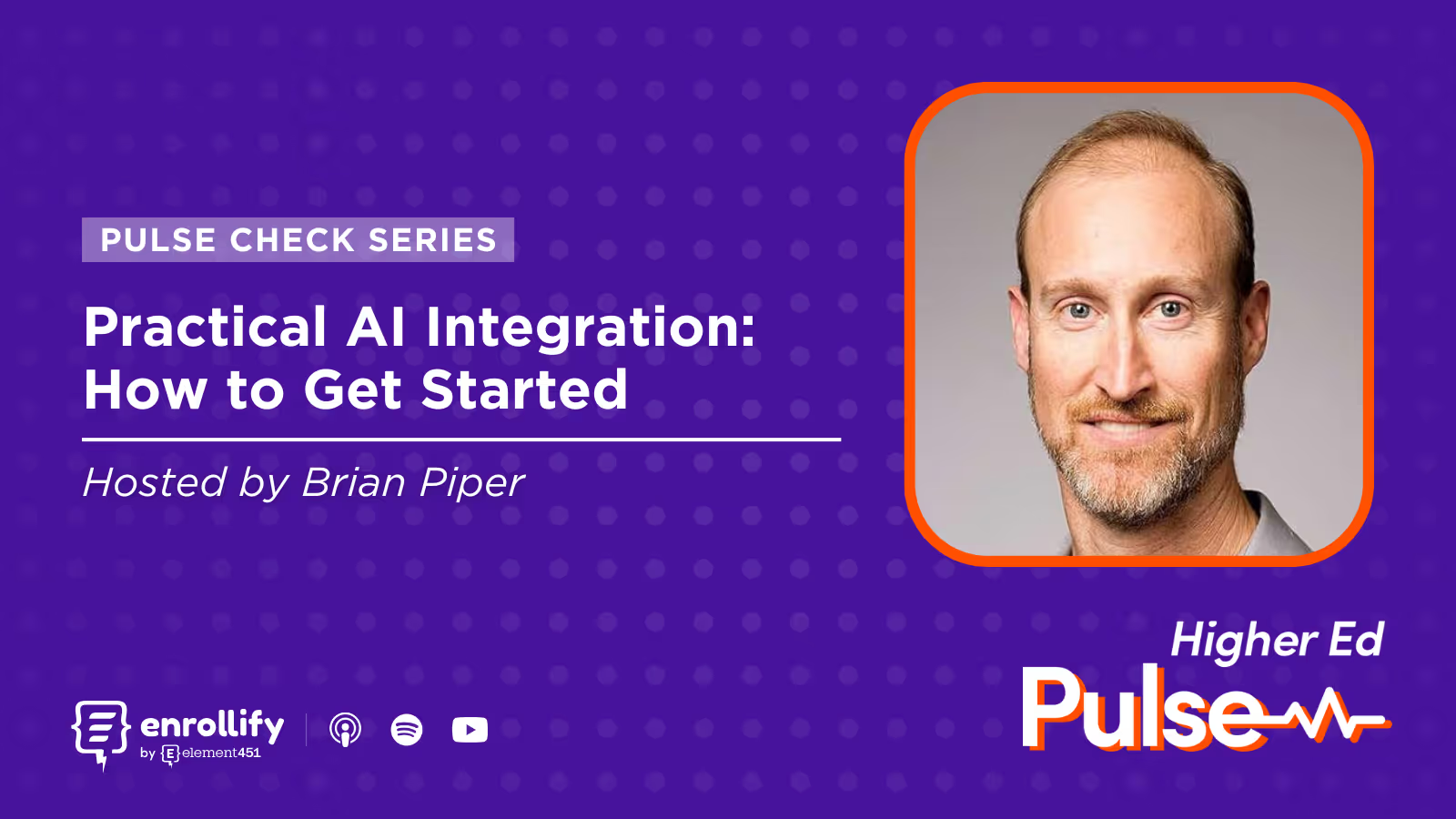
Brian Piper dives deep into the potential of custom GPTs in higher education. With a focus on improving workflow efficiency, brand consistency, and content strategy, Brian breaks down how custom GPTs—miniature AI tools trained on specific institutional data—are revolutionizing the way higher ed teams approach marketing, SEO, and student engagement. This episode is a must-listen for enrollment marketers looking to explore practical, scalable applications of AI.
Key Takeaways
- Custom GPTs streamline workflows by automating routine and creative tasks without requiring coding skills.
- Higher ed marketers can use AI personas to simulate feedback from prospective students through virtual focus groups.
- Custom GPTs support SEO strategy, offering keyword research, meta descriptions, and content gap analysis tailored to institutional goals.
- AI can enhance brand consistency, pulling from brand guidelines, strategic plans, and past content to generate on-brand messaging.
- Collaboration and scalability are easy with GPTs, making them perfect tools for departments and institutions looking to share resources.
What Are Custom GPTs and Why Should Higher Ed Care?
Custom GPTs are personalized AI tools that operate within ChatGPT’s environment—ideal for institutional use when customized with strategic data. Brian explains how these tools allow non-coders to automate parts of their workflow, creating efficiencies that ripple across departments. Not only are they user-friendly, but they also provide a low-barrier way to introduce AI to teams hesitant to adopt new technologies.
These GPTs can be designed to handle specific workflows, from content creation to data analysis, tailored to institutional needs. Once set up, they can be shared via simple links—even with those who don’t have paid versions of ChatGPT—making them accessible across various roles. The result? A scalable, democratized way to implement AI across your institution.
How Do Custom GPTs Improve Content and Engagement?
By aligning AI tools with your institution’s personas and brand guidelines, you create content that resonates. Brian walks through how he’s trained GPTs to embody specific prospective student personas—like undergrads, grads, or international students—and how those personas can be used in virtual focus groups to test content effectiveness. The ability to run these "focus groups" within ChatGPT means teams can gather feedback in real time from AI-driven models that simulate audience behavior and preferences.
This interactive approach not only enhances content personalization but also empowers teams to make data-informed decisions about messaging, creative, and campaign direction. Plus, the AI’s ability to evaluate cross-persona reactions adds an entirely new layer to A/B testing strategies.
Can GPTs Really Handle SEO Strategy in Higher Ed?
Absolutely—and they’re better at it than you might think. Brian shares how his team uses a custom GPT trained to execute full SEO workflows. These GPTs generate keyword ideas, recommend semantically related phrases, and analyze Search Console or SEMrush data. They even provide insights into which featured snippets and long-tail keywords to target—critical for improving AI and voice search visibility.
Beyond keyword research, custom GPTs can help with titling, meta descriptions, internal linking suggestions, and even identifying faculty experts for content quotes. Best of all, everything is built into one streamlined workflow. Once you prompt the tool with a content idea, it can guide you through the entire creation and optimization process while staying rooted in your institutional priorities.
How Can Institutions Train and Scale Custom GPTs?
Training a custom GPT starts with uploading relevant resources—strategic plans, brand and style guides, academic program data, and more. These tools become even more powerful when infused with institutional language and focus areas. Brian notes that you can also incorporate industry best practices and social media benchmarks to make GPTs more robust.
For instance, a LinkedIn-focused GPT could analyze your previous posts, assess what performed well, and generate new content accordingly. With access to internal performance data and external trends, custom GPTs serve as both content creators and strategic advisors—making them invaluable across marketing, admissions, and communications teams.
Enrollify is produced by Element451 — the next-generation AI student engagement platform helping institutions create meaningful and personalized interactions with students. Learn more at element451.com.
Attend the 2025 Engage Summit!
The Engage Summit is the premier conference for forward-thinking leaders and practitioners dedicated to exploring the transformative power of AI in education.
Explore the strategies and tools to step into the next generation of student engagement, supercharged by AI. You'll leave ready to deliver the most personalized digital engagement experience every step of the way.
👉🏻 Register now to secure your spot in Charlotte, NC, on June 24-25, 2025!





.svg)
.svg)
