






About the Episode
About The Episode:
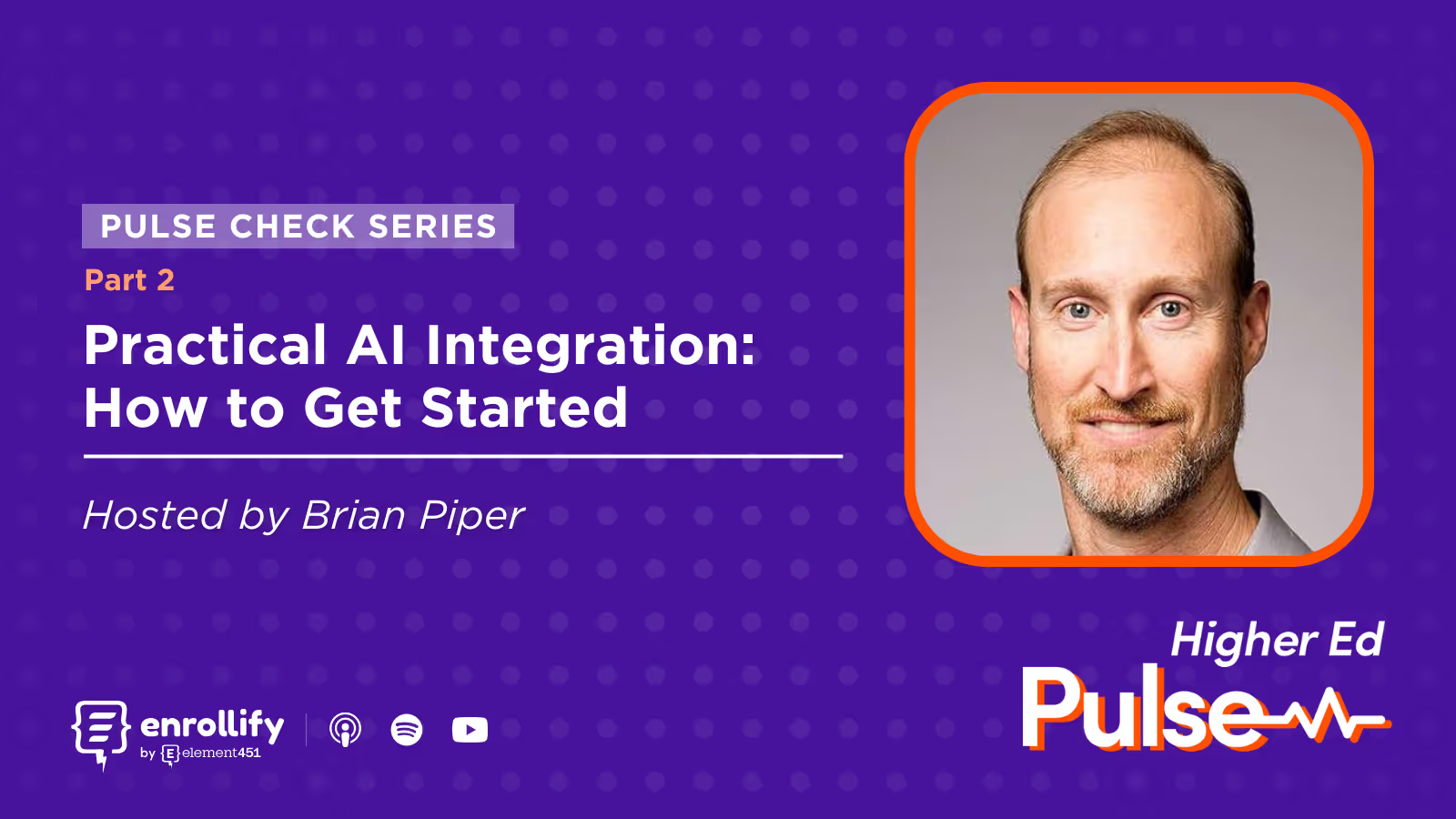
Brian Piper, Director of Content Strategy and Assessment at the University of Rochester, dives into the less flashy—but absolutely foundational—side of AI integration in higher ed: data and content readiness. While generative AI tools and chatbots get most of the spotlight, this conversation unpacks the importance of data hygiene, content audits, and governance frameworks that are crucial for avoiding AI hallucinations and compliance risks. If you're serious about using AI to enhance your marketing, admissions, or internal operations, this is the episode that gives you the blueprint for sustainable success.
Key Takeaways
- Bad data leads to bad AI — Inaccurate or outdated content results in AI outputs that are misleading, biased, or downright wrong.
- Data governance is a must — Define roles, responsibilities, permissions, and data quality standards before integrating AI tools.
- Content governance matters too — Inconsistent, conflicting, or irrelevant web content can confuse AI models and erode trust.
- Start with audits — Conduct a data and content audit before feeding anything into AI tools.
- Security and compliance are critical — Address risks associated with data privacy, legacy systems, and access control.
- Begin small, think big — Test AI tools on low-risk, high-value internal datasets before rolling out institution-wide.
- Implement review cycles — Outdated content needs archiving, and key pages should be reviewed on a regular schedule.
Why Data and Content Readiness Comes Before the AI Buzz
Before launching that shiny new AI-powered chatbot, there’s one uncomfortable question higher ed teams need to ask: Is our data even ready for this? In this episode, Brian Piper reminds us that AI is only as good as the content and data it’s trained on. When information is outdated, conflicting, or poorly organized, your AI tools will confidently regurgitate nonsense — aka "garbage in, convincingly presented garbage out."
Institutions often rush into AI adoption without realizing that unstructured data or inconsistent content can introduce hallucinations, reinforce biases, and open up security loopholes. Piper shares real-world examples, like a university chatbot trained on old HR documents that returned wildly inaccurate information—not because the AI failed, but because the content was never updated. It’s a sobering reminder that successful AI integration starts with unglamorous but vital housekeeping.
If your institution is serious about integrating AI into admissions, marketing, or advancement, you need to prioritize data governance, content audits, and version control. That’s the bedrock of any responsible and effective AI strategy.
What Is Data Governance in Higher Ed (and Why Should You Care)?
Data governance might sound like an IT-only initiative, but Piper argues it's everyone’s responsibility—from enrollment marketing teams to academic affairs. At its core, data governance is the system of people, processes, and tech that ensures your institutional data is accurate, secure, and accessible only to the right people. It’s about defining who owns what, who updates what, and how often those updates happen.
One of the biggest challenges in higher ed? Silos. With departments using different systems, collecting different data, and storing it in various places, duplication and fragmentation are rampant. A single person might be represented four different ways across systems—as a student, a TA, a staff member, and an alum. Without centralized governance and data standards, AI tools can't function effectively, and misinformation spreads like wildfire.
And don’t forget compliance. From FERPA to GDPR, you need clear frameworks in place to ensure regulatory requirements are met—especially when dealing with sensitive student information or integrating third-party AI tools.
Content Governance: Your Hidden AI Dealbreaker
While data governance handles your backend infrastructure, content governance is all about the stuff your audiences see: policies, web pages, PDFs, and knowledge bases. Piper explains that generative AI tools pull information directly from institutional content—so if your website hasn’t been updated since 2018, guess what your chatbot is saying in 2025?
Outdated or conflicting content across departments is a nightmare for AI. You could be training a model on two different tuition numbers, two sets of enrollment requirements, or multiple definitions of the same term. That inconsistency doesn’t just confuse the AI—it erodes user trust the moment someone gets a wrong answer.
The fix? Start with a content audit. Identify your most-used pages and policy docs, and evaluate them for accuracy, consistency, and relevance. Clean up old content, consolidate duplicated materials, and set up regular review cycles so your content doesn’t rot. Institutions like Forsyth Tech even monitor chatbot outputs to catch errors and feed updates back into their content workflows.
Data Hygiene: What It Takes to Clean Up Your Act
It’s not just about having data—it’s about having clean, standardized, usable data. According to Piper, some of the most common data quality issues in higher ed include duplicate records, inconsistent formatting (hello, campaign UTM chaos), missing fields, and outdated information. Worse, many of these errors come from manual entry or inconsistent processes across departments.
The first step? Run a data audit to see where your gaps and inconsistencies lie. Then, establish clear quality standards and validation rules to keep things clean going forward. If your institution doesn’t have the internal resources or expertise, this is where third-party vendors or data-cleaning tools can help.
And don't overlook version control and archiving. Keeping track of when content was created, when it changed, and who changed it isn’t just smart—it’s necessary. Clearly label and date your documents, and create sunsetting rules for time-sensitive content like event pages. The leaner and cleaner your content ecosystem, the more trustworthy your AI tools will be.
How to Start Small (and Smart) With AI Implementation
Piper wraps the episode with a powerful reminder: You don’t have to overhaul everything at once. Instead, start small with low-risk, high-value use cases—like internal chatbots for HR or IT policies. Use these as test cases to refine your content workflows, data standards, and permissioning frameworks. Track performance, fix issues, and scale intentionally.
One pro tip? Use Retrieval-Augmented Generation (RAG) models that monitor chatbot performance and flag outdated content in real time. Tools like these help create a feedback loop where your AI not only delivers answers but also signals when your content needs a tune-up.
Ultimately, AI integration in higher education is a long game. Success isn’t about adopting every shiny new tool—it’s about laying a strong foundation with trustworthy data and content that reflect your institutional values and strategic goals. Do that, and your AI tools won’t just work—they’ll win trust.
Enrollify is produced by Element451 — the next-generation AI student engagement platform helping institutions create meaningful and personalized interactions with students. Learn more at element451.com.
Attend the 2025 Engage Summit!
The Engage Summit is the premier conference for forward-thinking leaders and practitioners dedicated to exploring the transformative power of AI in education.
Explore the strategies and tools to step into the next generation of student engagement, supercharged by AI. You'll leave ready to deliver the most personalized digital engagement experience every step of the way.
👉🏻 Register now to secure your spot in Charlotte, NC, on June 24-25, 2025!



.svg)
.svg)
