






About the Episode
The AI Engage Summit is a free, virtual experience built to help higher ed leaders actually do something with AI. Over two afternoons, you’ll hear from peers, see practical demos, and walk away with ideas you can use immediately — no travel required, no cost to attend. If you’re ready to move AI from “interesting” to “impactful,” this is the place to be. Register now, don't miss out.
About the Episode:
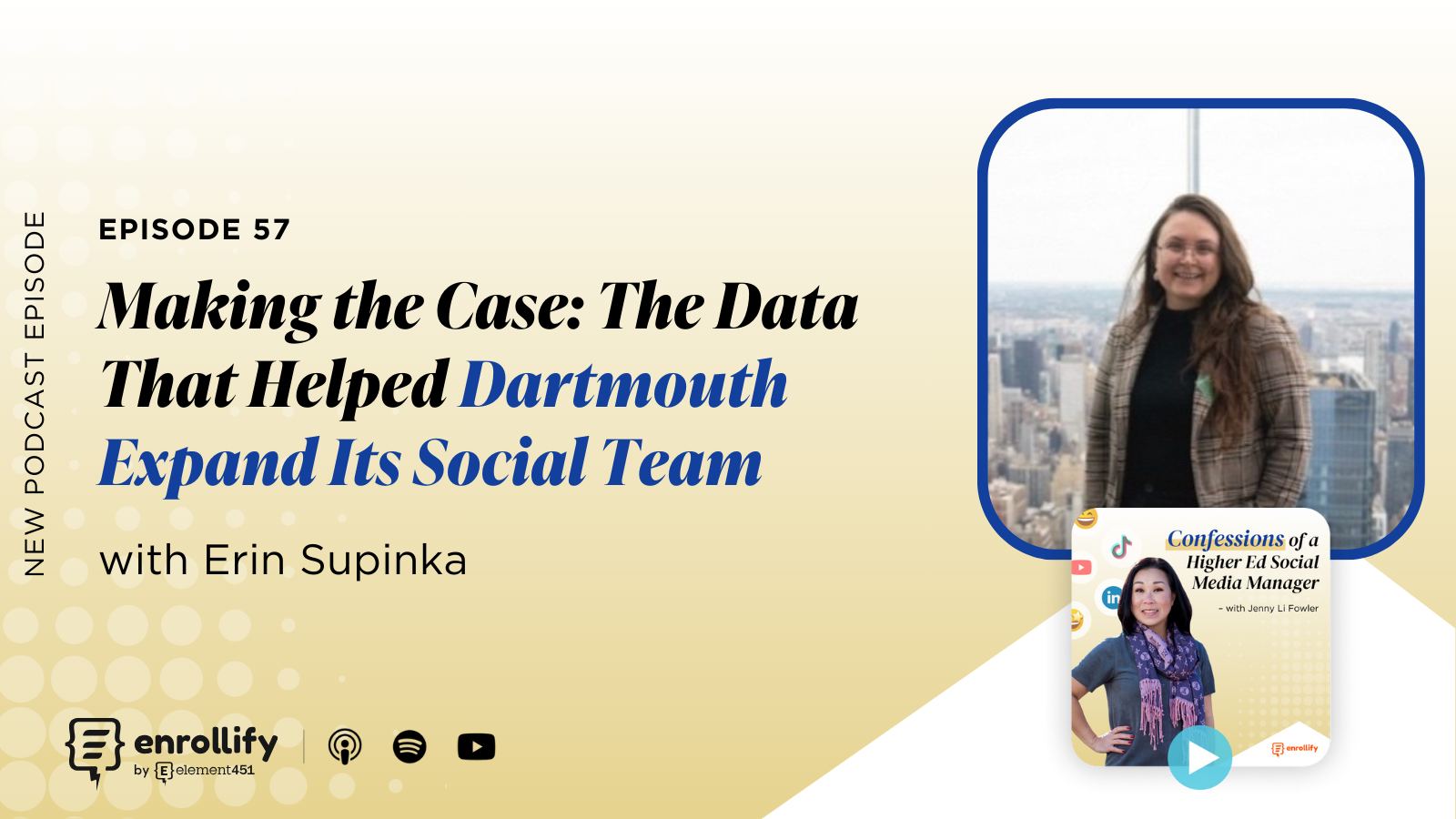
In this episode of Confessions of a Higher Ed Social Media Manager, Erin Supinka, Associate Director of Digital Engagement at Dartmouth College, shares the behind-the-scenes story of how she scaled Dartmouth’s social media team from a party of one to a high-performing team of four. Erin unpacks the practical steps, persistent challenges, and powerful advocacy it took to build a team that’s reshaping what digital engagement looks like in higher ed. Whether you’re a social media manager dreaming of more support or a leader wondering how to justify additional investment in social, this episode is your blueprint.
Key Takeaways
- Document your work like your team depends on it — because it does. Erin emphasizes the power of tracking tasks, links, engagements, and content volume to build a case for growing your team.
- Educate your leadership constantly. Even supportive supervisors may not understand the scope of social media work — it’s on you to show them.
- Be strategic with role creation. Erin shares how she hired both a social media manager and a content producer to address different needs within a rapidly evolving digital landscape.
- Let go to grow. Moving from solo practitioner to team leader means learning to share brand voice — and that takes trust, process, and patience.
- Make your presence human. One of Erin’s most engaging posts involved her stepping in front of the camera — a reminder that authenticity drives performance on social.
- Social media is the front door to your institution. Erin argues that platforms like Instagram and TikTok are now the most discoverable entry points for prospective students — and institutions should resource them accordingly.
Episode Summary
How long did it take Erin to grow Dartmouth’s social media team?
Erin began at Dartmouth in 2014 as a team of one. It wasn’t until 2019 — five years later — that she was able to make the case for a second full-time hire. But when that door opened, it opened wide: by early 2020, Dartmouth had hired both a social media manager and a social media producer. Today, the team includes four members who collaborate across strategy, content creation, engagement, and analytics.
What’s the difference between a social media manager and a producer?
At Dartmouth, the social media manager is primarily responsible for managing the platforms — overseeing publishing, community management, and engagement. The producer focuses on content creation, including multimedia storytelling and visual content. While those lines have blurred over time, the distinction helped Erin strategically fill gaps during the team’s growth phase.
How did Erin convince leadership to approve new hires?
The short answer? Documentation. Erin tracked everything — the number of links created, posts published, platform engagements, and campaign contributions. She also saved job descriptions from similar roles across the industry to help define what Dartmouth needed. By consistently bringing hard data and tangible evidence to conversations with leadership, she made a compelling, irrefutable case.
What kind of documentation does Erin recommend?
It starts with basic metrics: links created, platform engagements, time spent on content creation, and campaign-specific breakdowns. Erin also uses Sprout Social and Google Data Studio to maintain a live dashboard her team and leadership can access at any time. When she was solo, she even documented meaningful engagements and created screen recordings to show the invisible labor behind each post.
What emotional or strategic challenges came with expanding the team?
One surprising hurdle? Letting go. Erin candidly shares the emotional tension of handing off a brand she’d single-handedly shaped for years. She talks about the importance of trusting new hires to bring their voice to the table, while also providing guidance around tone and brand personality. It’s not always easy — but it’s essential to long-term success.
How does Erin continue advocating for her team?
Erin is relentless (in the best way). She finds every opportunity — meetings, planning sessions, campaign reviews — to highlight what her team contributes. Whether it’s 25 posts supporting a single campaign or amplification of community content, she makes sure her team’s work is visible and valued. Her rule: “Take up the space you deserve, because your work is taking up a lot of space in the brand.”
Why is social media more critical than ever in higher ed?
In Erin’s words, social is now one of the only ways people can truly “stumble upon” your institution. As AI reshapes search behavior and email inboxes get noisier, platforms like Instagram, TikTok, and YouTube are where future students discover schools they never planned to consider. Erin positions social media as the most open and accessible front door to a brand — one that deserves staffing, strategy, and investment.
How does Erin measure success?
Erin’s team looks beyond vanity metrics. Their reporting includes a blend of post performance, audience growth, engagement types, and campaign-level outcomes. They also track content made specifically for social (“social-first content”) and analyze long-form versus visual storytelling performance. Wins are celebrated — both expected and surprising — and even the misses are documented to guide future decisions.
What advice does Erin have for social media teams of one?
“Know your worth,” Erin says. Social media work might not always be taken seriously, but it’s central to your institution’s brand and marketing strategy. Her encouragement to fellow solo practitioners: start documenting today, be ready for the right conversation tomorrow, and never stop advocating. And if you ever need support, Erin’s door is always open — even if just to commiserate.
Connect With Our Host:
https://twitter.com/TheJennyLi
Enrollify is produced by Element451 — the next-generation AI student engagement platform helping institutions create meaningful and personalized interactions with students. Learn more at element451.com.





.svg)
.svg)
