






About the Episode
The AI Engage Summit is a free, virtual experience built to help higher ed leaders actually do something with AI. Over two afternoons, you’ll hear from peers, see practical demos, and walk away with ideas you can use immediately — no travel required, no cost to attend. If you’re ready to move AI from “interesting” to “impactful,” this is the place to be. Register now, don't miss out.
About the Episode:
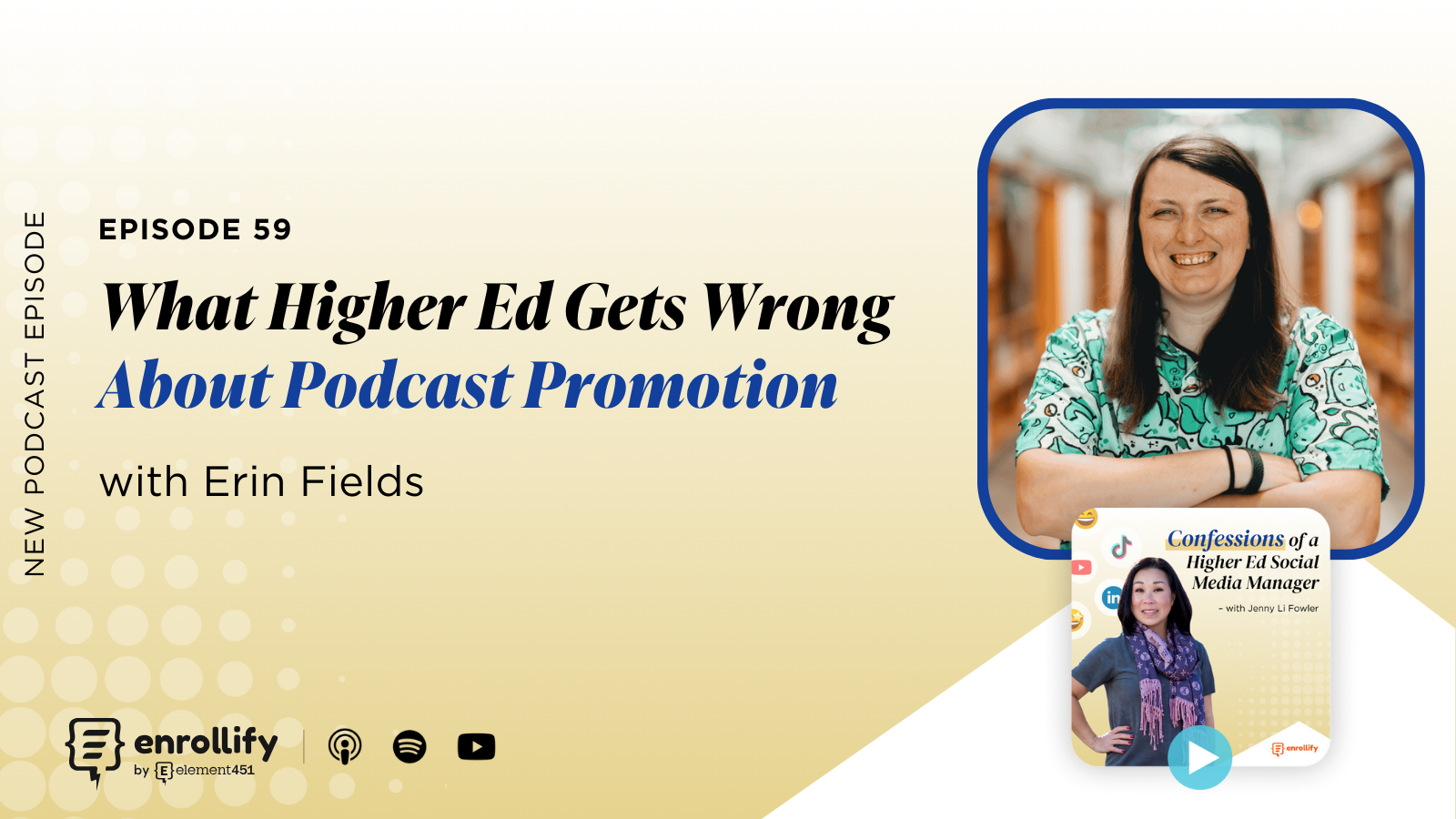
Jenny Li Fowler sits down with podcast strategist and former Enrollify team member Erin Fields to dive deep into how to successfully promote a podcast within the higher ed landscape. They unpack why podcasting isn’t just a trendy add-on—it’s a full-fledged marketing channel that demands strategy, consistency, and creativity. From turning podcast episodes into content engines to nailing promotion without a budget, this episode is packed with practical tips for higher ed marketers looking to elevate their podcasting game.
Key Takeaways
- ≥Podcasting is growing—fast: 73% of Americans have listened to a podcast, making it a mainstream content format for higher ed marketers to leverage.
- Strategy is not optional: Without a clear podcast strategy, shows risk becoming scattered, unfocused, and ultimately ineffective.
- Promotion is everything: Posting a podcast episode is just the beginning—promotion must be intentional, structured, and consistent.
- Think in formats, not clips: Treat each episode as a content engine that can generate multiple formats—video snippets, carousels, infographics, and more.
- You need a home base: Hosting your podcast on a dedicated web page allows for better audience tracking and more meaningful engagement.
- Consistency builds trust: A dependable release schedule and episode structure are essential for building a loyal listener base.
- Downloads aren’t the only metric: Pay attention to deeper indicators like completion rates, return listeners, and engagement with show notes and CTAs.
- Not all video is podcasting: Slapping a camera on a long conversation doesn’t make it watchable—video podcasting requires intentionality.
Episode Summary: FAQ-Style Deep Dive
Why is podcasting gaining so much traction in higher education marketing?
Podcasting is resonating because it offers “hands-busy, brain-engaged” content that fits seamlessly into the lives of higher ed audiences. Whether it's a lunchtime walk or a commute to campus, audio allows for uninterrupted, screen-free engagement—a rare commodity in today's content-saturated landscape. Erin points out that with 73% of Americans having listened to a podcast, the format has moved from niche to mainstream. The result? Marketers no longer need to convince people to listen to podcasts—they need to convince them to listen to yours.
What does a good podcast strategy look like in higher ed?
Podcasting without strategy is like driving without a map. According to Erin, a podcast strategy should act as a set of guardrails that clarify your audience, your purpose, and the outcomes you’re working toward. Whether your goal is to build community, warm up leads, or fuel your content engine, that purpose should dictate your guest choices, episode structure, and success metrics. A clear show promise—what listeners can expect every time—also goes a long way in building retention.
How should higher ed institutions promote their podcasts?
Promotion is not a “nice-to-have,” it’s the work. Erin breaks it into three buckets:
- Directories (Spotify, Apple, YouTube): Optimize your episode titles and descriptions like you would for SEO.
- Shares: Make it easy for guests and stakeholders to promote episodes with pre-made assets.
- Surfaces: Social media, email newsletters, and internal comms should all drive traffic back to the episode.
Importantly, promotion should be consistent. Erin recommends defining a clear promotional “runway” before and after an episode drops—tease the pain point beforehand, publish the episode with context, and resurface clips and insights afterward to give the content multiple lives.
What can you do when you don’t have a budget?
Even without paid media, a strategic organic approach can still drive meaningful reach. Erin recommends building a reusable content workflow:
- Clip short, value-packed snippets
- Create infographics or carousels based on episode frameworks
- Write repurposed blog-style takeaways
By thinking in terms of content types rather than “one episode = one post,” your podcast becomes a never-ending well of repurposable content.
Why is having a website or landing page for your podcast important?
Most listening platforms offer limited analytics. If you don’t have a central place to host your podcast—like a landing page with proper tracking—you lose out on critical audience insights. Erin emphasizes that with a site, you can see who’s visiting, how often, and from where. This allows you to identify your most engaged listeners and tailor follow-up content or outreach accordingly.
How do you turn a podcast into a content engine?
When approached intentionally, a podcast can be a cornerstone for your entire content strategy. Erin shares that each episode can—and should—yield multiple assets:
- A top-of-funnel clip that names the problem
- A mid-funnel graphic or carousel that shares a framework
- A bottom-funnel post that tackles objections or dives deeper
All these assets should ladder up to a single, cohesive message—making your content calendar not only more consistent, but more strategic.
What are the most common mistakes higher ed marketers make when podcasting?
The biggest mistake? Thinking the episode is the product. Erin flips that idea: the real product is the habit—getting someone to return week after week. Without a compelling hook, a clear value proposition, or a repeatable structure, listeners won't stay. And without retention, growth is nearly impossible.
Another misstep is getting hung up on download numbers alone. Metrics like listener retention, time spent, link clicks, and email signups are often better indicators of long-term value and engagement.
What’s the low-hanging fruit in podcast promotion?
Consistency. Erin stresses that being consistent—in release schedule, episode format, and promotional tactics—builds listener trust. When people know what to expect and when to expect it, they’re more likely to form listening habits. And those habits are what build community and drive growth.
Connect With Our Host:
https://twitter.com/TheJennyLi
Enrollify is produced by Element451 — the next-generation AI student engagement platform helping institutions create meaningful and personalized interactions with students. Learn more at element451.com.


.svg)
.svg)
