






About the Episode
About the Episode:
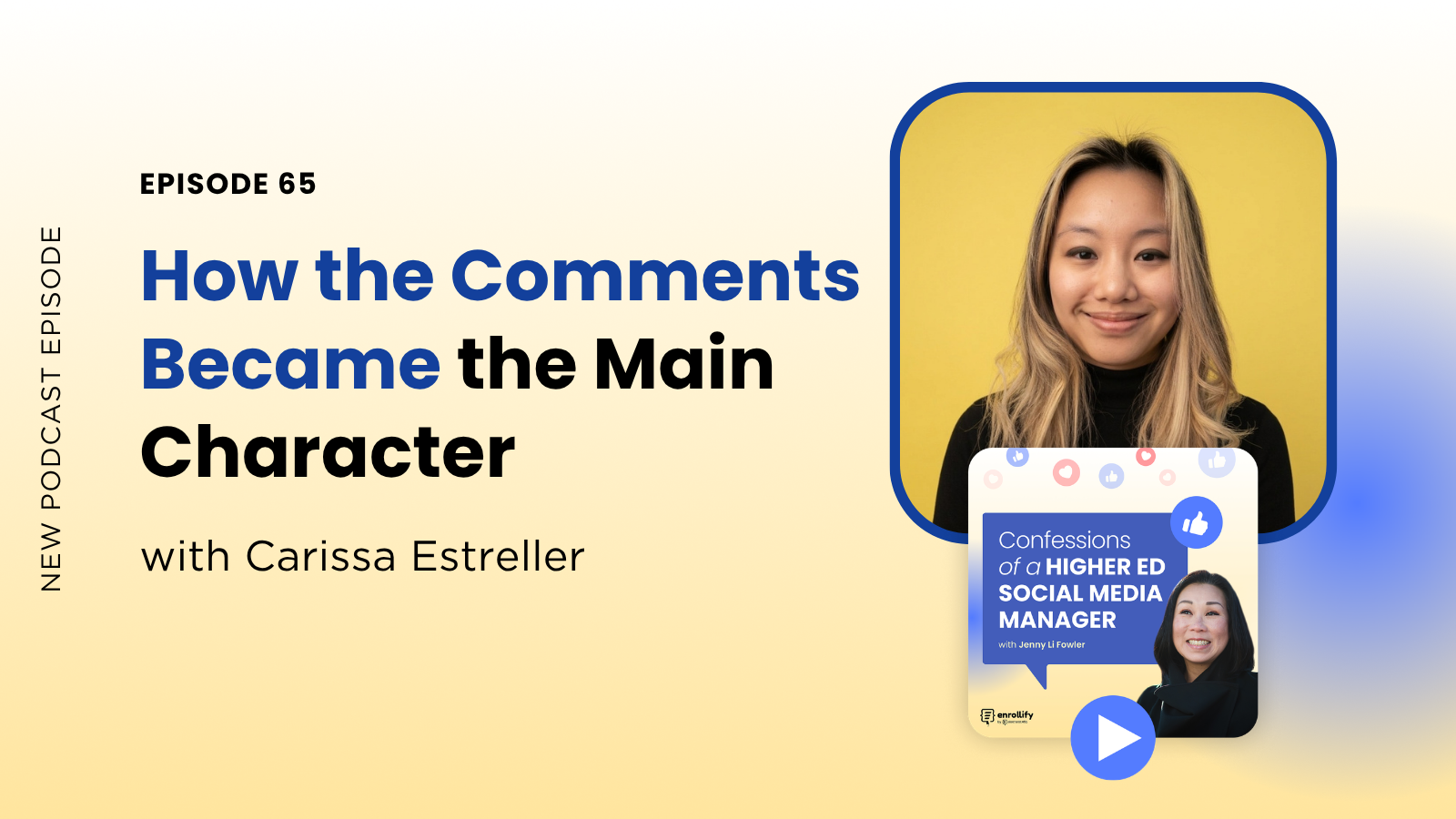
This episode featuring Carissa Estreller explores a powerful shift in higher education content marketing: the rise of the comment section as a strategic asset. What used to be an afterthought is now a core driver of engagement, insight, and even content ideation. Carissa introduces the concept of a “comment strategy” and explains why social media managers—especially in higher ed—can no longer afford to ignore it. If you're thinking about leveling up your enrollment marketing approach, this episode offers a fresh, data-informed perspective.
Key Takeaways
- The comment section is no longer secondary—it’s often the main event driving engagement and visibility
- A strong higher education content marketing strategy should include intentional comment participation and analysis
- Social listening in comments unlocks valuable qualitative insights for enrollment marketing campaigns
- Positive comments are just as valuable as negative ones for shaping future content and messaging
- Commenting as a brand (or as a subject matter expert) can increase reach, authority, and follower growth
- Platforms like LinkedIn are beginning to reward comment engagement with measurable impressions
- Emotional intelligence and “reading the room” are critical for effective comment strategy execution
- Social media teams of one are increasingly unsustainable given the growing scope of responsibilities
Episode Summary
Why a Comment Strategy Is Essential for Higher Education Content Marketing
The episode opens with a bold idea: most social media managers have a response strategy—but not a comment strategy. Carissa Estreller challenges this norm by arguing that comments are not just reactions; they are opportunities for proactive engagement and storytelling. In the evolving landscape of higher education content marketing, ignoring comments means missing half the conversation.
She explains that platforms like TikTok and LinkedIn have shifted user behavior. Audiences are no longer just consuming content—they’re diving into the comment section to validate, react, and even reinterpret what they’ve seen. This behavioral shift means that institutions must rethink how they measure engagement and success, especially when considering performance indicators in education.
For enrollment marketers, this represents a strategic unlock. Comments offer real-time insight into audience sentiment, questions, and misconceptions. When leveraged effectively, they can inform messaging, improve campaigns, and ultimately strengthen marketing strategy for student recruitment.
The Comment Section as a Goldmine for Social Listening
Carissa emphasizes that comments are one of the richest sources of education market research available today. Instead of relying solely on surveys or formal feedback loops, social media managers can tap into unfiltered audience opinions directly within comment threads. This is where authentic sentiment lives—and where trends begin to surface.
She breaks down how both negative and positive comments should be analyzed. Negative feedback can highlight friction points in the student journey, while positive comments often reveal what resonates most with your audience. Together, these insights create a more holistic view of audience needs and expectations, supporting stronger student success strategies.
Importantly, Carissa notes that some of the best content ideas come directly from comments. A single insightful or viral comment can spark an entire campaign or content series. This reinforces the idea that data analytics in higher education isn’t just about numbers—it’s also about qualitative, human-centered insights.
Building a Smart and Human Comment Strategy
Developing a comment strategy requires more than պարզապես jumping into conversations—it demands nuance and awareness. Carissa introduces the idea of being a “digital culturalist,” someone who understands internet behavior, cultural trends, and context. This skill is essential for knowing when (and when not) a brand should engage.
She highlights a key tension: while witty brand comments (think Wendy’s-style engagement) can work, audiences are becoming more selective about when brands are welcome in conversations. This is especially true in higher ed, where authenticity and credibility matter deeply. Knowing how to “read the room” is a critical skill for anyone managing higher education content marketing.
One practical approach she сунушs is empowering subject matter experts—faculty, researchers, or institutional leaders—to engage in conversations. This shifts the voice from “brand” to “human,” increasing trust and relevance. It’s a subtle but powerful shift that aligns with evolving expectations in enrollment marketing.
Turning Comments into Content (and Growth)
One of the most compelling parts of the episode is Carissa’s real-world example of a viral LinkedIn comment. What started as a thoughtful reply turned into a high-performing content piece, driving visibility, followers, and even podcast opportunities. This illustrates the compounding power of a well-executed comment strategy.
For higher ed marketers, this is a game-changer. Instead of constantly generating new ideas from scratch, teams can mine their own comment sections for inspiration. This not only saves time but also ensures that content is aligned with audience interests—an essential component of effective SEO for higher education.
The takeaway is clear: comments are not just engagement—they are content. When integrated into a broader marketing strategy for student recruitment, they can drive meaningful growth and differentiation in an increasingly noisy digital landscape.
The Reality Check: Teams of One Can’t Keep Up
The episode closes with a candid truth: the demands of modern social media—especially with the addition of comment strategy—are too great for a single person to manage effectively. From content creation to analytics to community engagement, the workload has expanded significantly.
Carissa argues that institutions must rethink how they resource social media teams. Without adequate support, even the most talented social media managers will struggle to keep up, let alone innovate. This has direct implications for trends in higher education marketing, where agility and responsiveness are becoming competitive advantages.
For leaders in higher ed, this is a call to action. Investing in social media is no longer optional—it’s essential for staying relevant, engaging prospective students, and building meaningful digital communities.
Connect With Our Host:
https://twitter.com/TheJennyLi
Enrollify is produced by Element451 — the next-generation AI student engagement platform helping institutions create meaningful and personalized interactions with students. Learn more at element451.com.






.svg)
.svg)
