






About the Episode
Got a story to tell? An innovative idea to share? Fill out our guest nomination form and let's chat!
About the Episode:
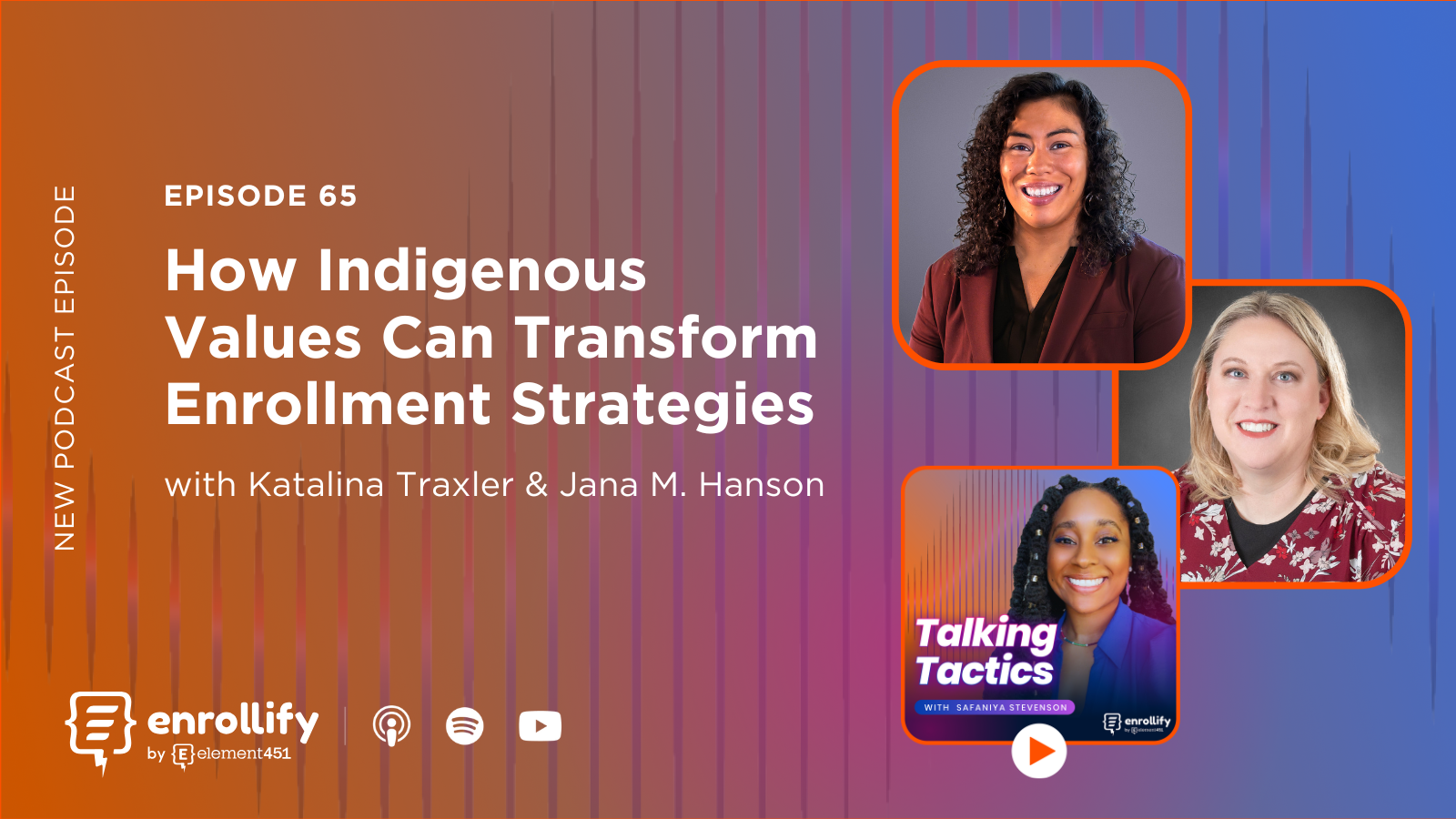
In this episode of Talking Tactics, host Safaniya Stevenson sits down with Jana Hanson of the American Indian Higher Education Consortium (AIHEC) and Kata Traxler from Student Ready Strategies to explore how tribal colleges model culturally rooted, community-centered student support. Together, they dive deep into how embracing Indigenous values can reshape how institutions approach family engagement, enrollment communication, and student success. This conversation offers higher ed leaders tactical guidance for more inclusive, empathetic, and effective enrollment strategies.
Key Takeaways
- Reframe Family Engagement: Move from informing families to actively including them in the admissions and student support journey—especially for Indigenous students where education is a collective endeavor.
- Cultural Context Matters: Tribal Colleges and Universities (TCUs) demonstrate that when culture guides policy and communication, students thrive. Flexible, empathy-based policies benefit all students, not just Indigenous populations.
- Community Comes First: Recruitment efforts targeting Indigenous students must be preceded by authentic, long-term relationship building with tribal communities. Trust must be earned before recruitment begins.
- Representation Matters: Admissions and enrollment teams should reflect the communities they serve. Hiring staff with shared lived experiences enhances communication, trust, and cultural relevance.
- Designing for the Margins Helps the Middle: Systems and support services created with Indigenous students in mind often improve the overall student experience across all demographics.
- Data-Informed, Community-Aligned: Use tribal calendars, oral traditions, and culturally relevant channels to communicate with Indigenous families—tactics that can strengthen any enrollment marketing funnel.
Episode Summary: FAQs and Insights from the Conversation
How should institutions reframe family engagement in Indigenous communities?
At many traditional universities, family communication is logistical: newsletters, orientations, surveys. But for Indigenous communities, family is central—not peripheral. Decisions around education are made collectively, with input from parents, elders, and extended family members. Tribal Colleges and Universities (TCUs) model this well, building family inclusion into every layer of the student experience—from admissions to support services. The key takeaway? Stop asking how do we inform families and start asking how do we include them.
Why is it critical to build community trust before recruiting Indigenous students?
Jana Hanson underscores that without genuine, ongoing relationships with tribal communities, recruitment efforts will fall flat. Indigenous families are less likely to trust institutions that haven't shown up for them beyond a promotional flyer or a campus visit. Instead, institutions must attend community events, partner with tribal educators, and give back through scholarships, internships, and culturally relevant outreach. Relationship-building is the prerequisite for recruitment—not the other way around.
What does student readiness mean when family plays a key decision-making role?
Kata Traxler highlights that “student-ready institutions” must account for family involvement as a strength, not a barrier. At TCUs, the family isn't just consulted—they're co-decision makers. Enrollment communications should be designed with the understanding that college is a family journey. By looping families into conversations around financial aid, support services, and student expectations from the start, institutions can build more stable foundations for student success.
What are tactical steps enrollment teams can take to serve Indigenous communities better?
- Align outreach with tribal calendars — respect cultural schedules and ceremonial obligations.
- Diversify communication formats — pair digital outreach with traditional methods like phone calls or mailed letters.
- Hire culturally competent staff — team members with shared experiences build authentic trust.
- Co-design programs with Indigenous voices — invite tribal alumni and educators to co-lead outreach or serve as cultural liaisons.
- Invest in community, not just recruitment — support local initiatives and avoid extractive engagement.
How can designing for Indigenous students improve experiences for everyone?
TCUs have shown that when policies are flexible and rooted in empathy, students feel more connected and are more likely to succeed. For example, rethinking rigid attendance policies to accommodate cultural ceremonies not only supports Indigenous students—it humanizes institutional expectations for everyone. Similarly, simplifying bureaucratic jargon into student-friendly language helps all learners navigate systems with greater ease. In short, inclusive design isn’t niche—it’s universal.
Where can institutions start if they want to learn from or partner with TCUs?
Kata and Jana recommend starting locally. Look at which tribal nations and TCUs are in your state or region and begin building relationships with those communities. Reach out authentically—not just with flyers or cold calls, but with curiosity and respect. Attend tribal events, listen to local Indigenous educators, and explore resources from organizations like AIHEC. And next time you're at a higher ed conference, prioritize sessions led by Indigenous voices.
Connect With Our Host:
About The Enrollify Podcast Network: The Higher Ed Pulse is a part of the Enrollify Podcast Network. If you like this podcast, chances are you’ll like other Enrollify shows too!
Some of our favorites include Generation AI and Confessions of a Higher Education Social Media Manager.
Enrollify is produced by Element451 — the next-generation AI student engagement platform helping institutions create meaningful and personalized interactions with students. Learn more at element451.com.





.svg)
.svg)
