






About the Episode
Got a story to tell? An innovative idea to share? Fill out our guest nomination form and let's chat!
About the Episode:

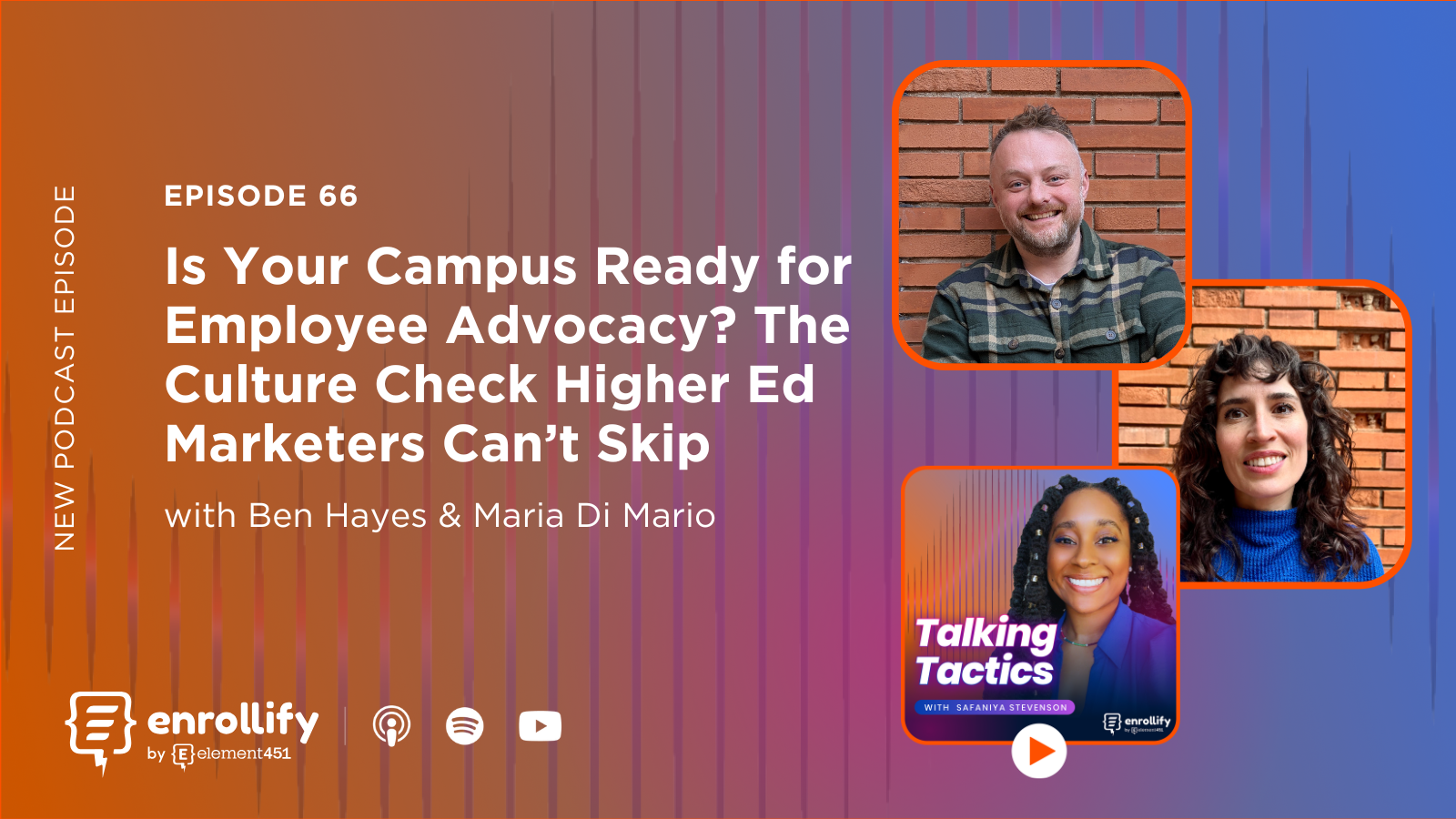
Safaniya Stevenson sits down with Ben Hayes and Maria Di Mario from Hubbub Labs to dive deep into a rising topic in higher education content marketing: employee advocacy. This candid conversation unpacks what true employee advocacy looks like, why it’s not for every institution, and how to assess your campus culture before jumping in. The trio also shares lessons from a successful partnership with SRT Fairs and explores how faculty and staff voices can help build institutional trust and humanize your brand on platforms like LinkedIn.
Key Takeaways
- Employee advocacy in higher education works best in institutions with a culture of trust, openness, and long-term brand thinking.
- A “culture audit” is a crucial first step in assessing readiness for an employee advocacy program.
- Faculty and staff can become powerful, authentic ambassadors—when given the right support, training, and space to be themselves.
- Employee-led content performs well because it shows the real people behind the brand—something AI or curated brand messaging alone can’t replicate.
- Institutions that embrace diverse voices and authentic storytelling via faculty and staff are better positioned to build trust with Gen Z and Gen Alpha.
- Regular brainstorming sessions, internal communities (Slack, Teams, WhatsApp), and ongoing support help programs stick.
- Employee advocacy isn’t a quick-fix enrollment tactic—it’s a long-term investment in community, trust, and brand building.
Episode Summary
What Is Employee Advocacy in Higher Education?
Employee advocacy, as defined by Ben and Maria, is the intentional amplification of a university's brand voice through the authentic voices of its people—faculty, staff, and other internal stakeholders. Unlike traditional marketing campaigns that are often short-term and enrollment-driven, employee advocacy is about long-term brand building and authentic engagement. It’s real humans talking to real humans—especially crucial when prospective students are looking for genuine insight into campus life and academic communities.
Maria points out that while most industries try to make boring products sound exciting, higher ed often does the opposite. Universities are places of groundbreaking research and inspiring people—but their marketing doesn’t always reflect that. Employee advocacy offers a chance to surface those stories organically, in a way that feels trustworthy and personal.
How Can You Tell If Your Campus Culture Is Ready?
One of the most compelling insights from the episode is the idea that employee advocacy isn’t for everyone. Red flags that your institution might not be ready? A lack of trust, a hyper-controlling top-down communication style, and an overly campaign-focused marketing model. Maria and Ben stress that institutions need a culture that empowers—not polices—their people. Faculty should feel comfortable sharing their voice online without fear of backlash. Marketing teams should be connected across departments, not siloed.
They also talk about the necessity of a "culture audit"—not a heavy-handed assessment, but rather a pulse-check on whether your campus supports diversity of thought, safe expression, and cross-departmental collaboration. If your internal brand doesn’t reflect the real values of your community, you’re not ready to amplify it externally.
What Does a Successful Employee Advocacy Program Look Like?
In their work with SRT Fairs, Hubbub Labs created a framework that made advocacy both structured and flexible. They started with a creative workshop to generate content ideas and templates that faculty and staff could use to inspire their own posts. Importantly, the program included:
- Initial brainstorming sessions where colleagues helped each other identify stories worth sharing.
- A shared library of post ideas aligned with the institution’s value props and academic strengths.
- Private support groups (via Slack, Teams, etc.) where participants could ask for feedback, get encouragement, and celebrate wins.
- Clear but flexible social media guidelines—not tone-policing, but high-level dos and don’ts rooted in institutional values.
They emphasized that consistency matters more than volume. Some participants posted weekly, others bi-weekly—but what made the initiative successful was the emotional support and freedom to be authentic.
How Do You Balance Authenticity with Brand Alignment?
One of the big questions facing higher ed marketers is: How do we empower authenticity without losing brand cohesion? Maria and Ben's answer: Let go of perfection. The goal isn’t to have every post sound like your official tone of voice—it’s to have genuine people share what they love about their work, their students, or their academic field.
As Maria puts it, “If you wouldn’t say it in the office, don’t say it online.” That simple filter helps faculty feel safe to be themselves without stepping out of bounds. Ben adds that institutions should embrace "rough around the edges" content—because that’s what resonates. That’s the kind of human, imperfect voice that builds trust, especially with digital-native generations who are deeply skeptical of overproduced brand messaging.
They also underscore that employee advocacy can be a powerful way to quietly show your institution's DEI values without having to make loud, performative statements. When diverse faculty and staff share their perspectives authentically, it becomes clear who your institution values and supports.
Connect With Our Host:
Enrollify is produced by Element451 — the next-generation AI student engagement platform helping institutions create meaningful and personalized interactions with students. Learn more at element451.com.




.svg)
.svg)
