






About the Episode
Got a story to tell? An innovative idea to share? Fill out our guest nomination form and let's chat!
About the Episode:
In the Room Where It Happens: Generative AI Policy Creation in Higher Education
Marketing and Enrollment Management AI Readiness Report 2025
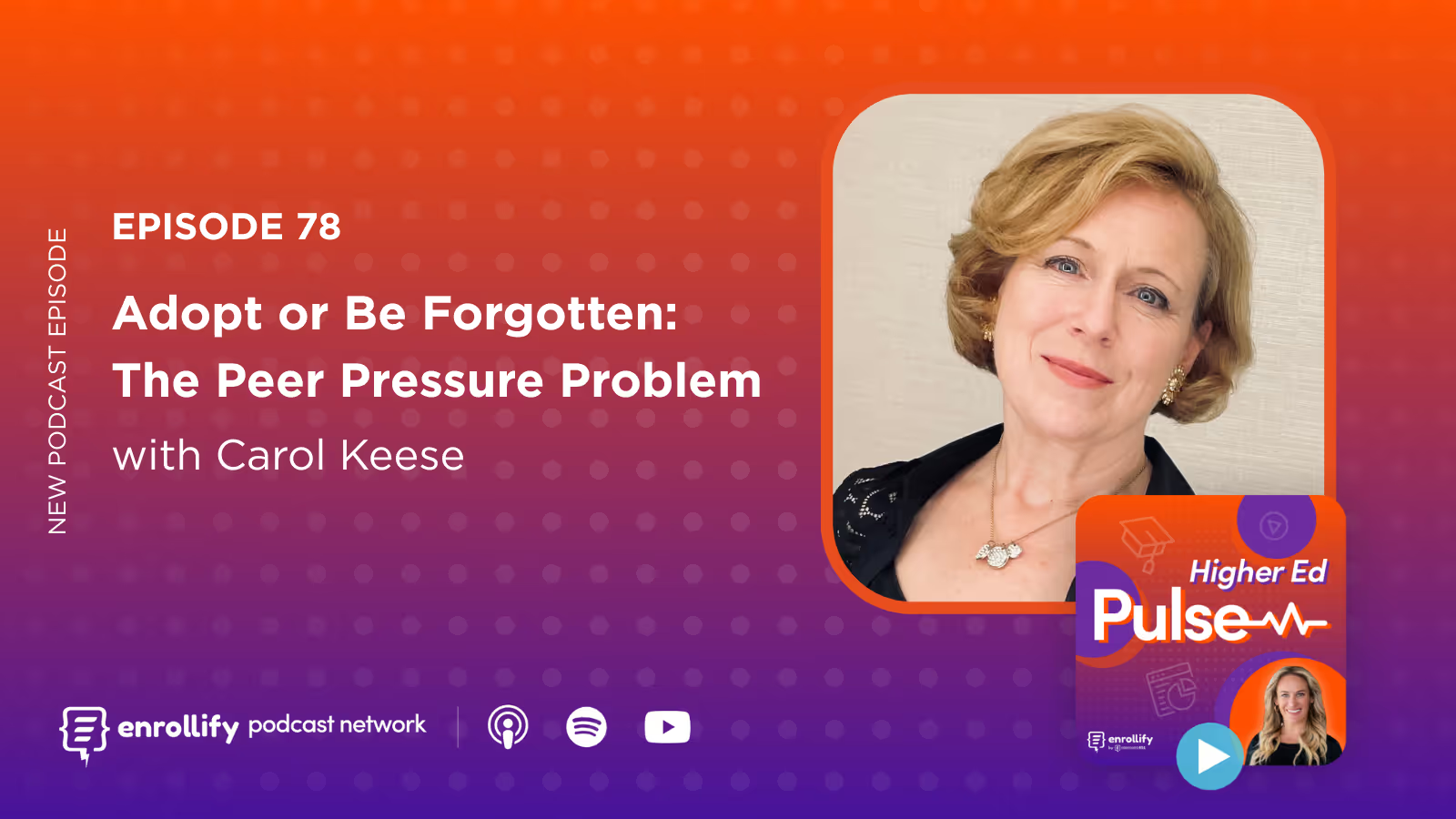
On this episode of Higher Ed Pulse, host Mallory Willsea sits down with Carol Keese, VP for Communications and Chief Marketing Officer at the University of Oregon, to explore what happens when fear—not clarity—drives AI strategy. This conversation dives deep into the dangers of AI copycat culture, the hype cycle gripping higher ed, and the critical importance of grounding decisions in institutional values. Tune in to learn why now is the time for thoughtful, strategic adoption—not reactive moves.
Key Takeaways
- Only 21% of institutions feel “ahead” on AI—yet most decisions are shaped by peer pressure, not purpose.
- Most institutions lack formal AI policies, fueling ambiguity, fear, and reactive decision-making.
- Copycat culture is widespread—but imitation without alignment leads to ineffective strategy.
- AI is not one thing. Understanding its wide-ranging applications—from workflow automation to audience perception—is essential.
- Fundamentals still matter. From SEO to brand voice, AI should support—not replace—core strategy.
- Organizations should focus on AI experimentation within their business functions, not just headline-grabbing innovations.
- Looking outside of higher ed—for lessons from Fortune 500s and consumer brands—can guide smarter, faster decisions.
Episode Summary: Your Most Pressing Questions, Answered
What does it actually mean to be “ahead” on AI in higher ed?
While 21% of institutions claim to be ahead, Carol Keese questions whether “ahead” is even a meaningful metric in a landscape where the curve hasn’t peaked yet. Most schools are responding to hype—not anchoring in strategy. Instead of obsessing over who's first, she argues the focus should be on smart, scalable adoption. Being “ahead” isn’t about launching flashy pilots—it’s about using AI to meaningfully improve core business functions like workflow automation, content production, and audience insights.
Is the pressure to “move fast” helping—or hurting—strategy?
Mallory and Carol dive into the tension between momentum and intention. The fear of falling behind is real, but chasing the next shiny thing can come at the cost of thoughtful, values-aligned decisions. Carol urges leaders to reject hype-fueled urgency and instead double down on the fundamentals: SEO, content strategy, brand clarity, and meaningful audience engagement. These aren’t outdated concepts—they’re the very foundation of AI effectiveness.
Who should be making AI decisions on campus?
Great question. Spoiler: it’s not just the IT team. According to Carol, effective AI strategy lives at the intersection of academic mission, operational needs, and ethical policy. While presidents and faculty senates are key players in setting campus-wide direction, AI’s everyday applications in marketing, communications, enrollment, and brand reputation also require business-side leadership. Not all use cases are equal—and not all require the same level of governance.
How are AI tools being used in marketing and communications right now?
At Oregon, Carol’s team is focused on measurable, grounded implementations. Their plan for the year includes integrating AI into three areas: content creation, workflow automation, and audience analysis. Rather than launching PR-ready pilots, they’re investing in scalable change—embedding tools into everyday operations to build proficiency and prepare for future innovation. It’s not glamorous. But it’s strategic. And it’s working.
What does “smart benchmarking” look like in this environment?
Carol reminds us that while higher ed loves to learn from each other, mimicking without context is risky. Instead of looking across the street, she suggests looking outside the industry. Fortune 500 companies are investing millions into brand testing, message modeling, and AI-powered perception tracking. Higher ed should observe, adapt, and adopt accordingly. As Carol puts it: we may not be able to build the models ourselves—but we can absolutely learn from those who are.
Why aren’t more institutions using AI for brand sentiment and audience messaging?
Most current AI conversations are stuck in efficiency mode—focused on speeding up email replies or chatbot responses. But Carol sees massive untapped potential in AI’s ability to test messaging, understand brand perception, and optimize communications for different audiences. From managing crises to tailoring language for legislators vs. parents, AI has the power to increase relevance and precision—if we’re willing to invest beyond the basics.
What’s the role of leadership in navigating the AI hype cycle?
Carol encourages leaders to ground their teams in reality and resist being swept up by fear. New technologies will keep coming. The fundamentals—clear messaging, compelling brand positioning, and meaningful engagement—will always matter. Leaders should coach their teams to “ride the bike,” as she says. That means experimenting, learning, and integrating AI into their everyday work—not waiting for perfect clarity or a complete roadmap to begin.
Connect With Our Host:
Mallory Willsea
https://www.linkedin.com/in/mallorywillsea/
https://twitter.com/mallorywillsea
About The Enrollify Podcast Network: The Higher Ed Pulse is a part of the Enrollify Podcast Network. If you like this podcast, chances are you’ll like other Enrollify shows too!
Some of our favorites include Generation AI and Confessions of a Higher Education Social Media Manager.
Enrollify is produced by Element451 — the next-generation AI student engagement platform helping institutions create meaningful and personalized interactions with students. Learn more at element451.com.





.svg)
.svg)
