






About the Episode
Got a story to tell? An innovative idea to share? Fill out our guest nomination form and let's chat!
About the Episode:
Download: How Students Search for Colleges in 2025
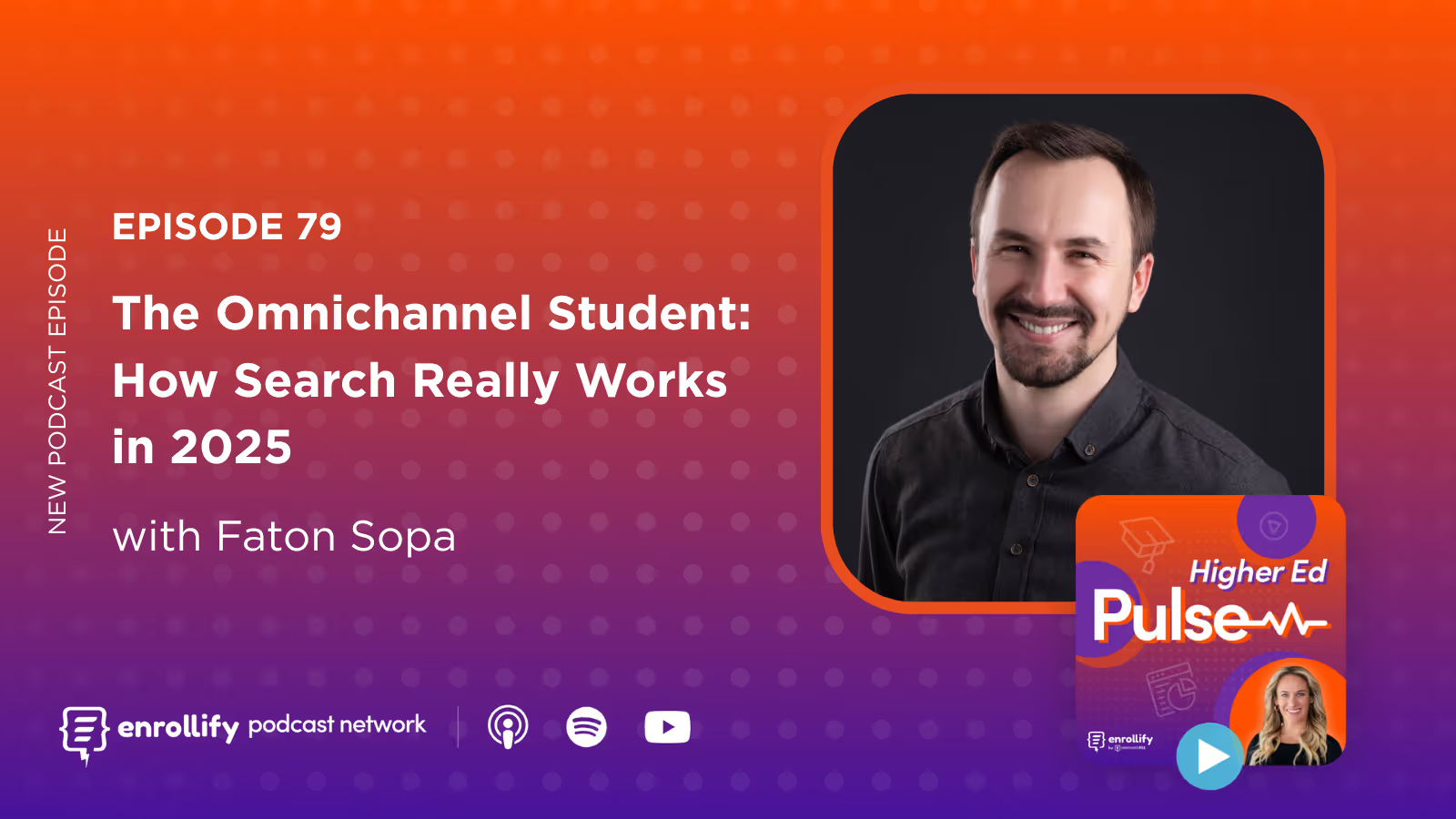
In this episode of Higher Ed Pulse, host Mallory Willsea sits down with Faton Sopa, Co-Founder and CEO of Manaferra, to unpack the most in-depth research yet on how students are searching for colleges in 2025. From the rise of platform switching to the impact of AI and peer-driven validation, Faton shares actionable insights into how student behavior is evolving—and how enrollment marketers must adapt their strategies to keep pace. If you’re still focused solely on winning the first click on Google, this episode will shift your perspective fast.
Key Takeaways
- The college search journey in 2025 is omnichannel: Students move intentionally between Google, social media, Reddit, YouTube, and AI tools depending on the stage of their decision process.
- Google is no longer the final authority: Its dominance drops dramatically from awareness to decision stage across all student segments.
- AI tools like ChatGPT are now trusted decision-making aids: A quarter to a third of prospective students use AI tools at nearly every step of the journey.
- Students are “problem loyal,” not platform loyal: They go where they believe the best answer lives, not where they started their search.
- Reddit is rising as a key source for authentic peer insights: Students use forums to validate and fact-check what they see elsewhere.
- Content must match platform and intent: Winning schools are creating content tailored to student questions at each stage and distributing it where students are most likely to ask them.
- Institutions need to think beyond Google SEO: AI visibility audits and omnichannel content strategies are now essential to stay visible.
- Start small, scale smart: Pick one program and audit the student journey to begin adjusting your strategy immediately.
Episode Summary
What’s the big shift in how students are searching for colleges in 2025?
Faton Sopa reveals that the modern student search journey has gone fully omnichannel. Unlike the past where a single Google search might lead to a decision, today’s students move through platforms with clear intent. Undergraduates, graduate students, and adult learners alike now start with Google but soon switch to Instagram, TikTok, YouTube, Reddit, and AI tools like ChatGPT to get the information they need at each stage. The headline takeaway? Institutions are often still optimized for the starting line—Google—while students have long since moved on.
Why is Google losing ground, and what are students doing instead?
Google isn’t disappearing, but it is losing its role as the final decision-making tool. Manaferra’s research found that reliance on Google drops significantly in later stages of the journey. This is due to students seeking more personal, nuanced, and contextualized answers—things Google’s AI overviews or standard search listings don’t always provide. Platforms like Reddit offer peer validation, YouTube and TikTok offer lived experience, and ChatGPT offers quick, personalized answers. Students are piecing together information from multiple sources—and they trust what feels real and relevant over what’s just ranked #1.
How should institutions restructure their content strategies?
Mallory and Faton emphasize that institutions must stop building content by platform and start building it by question. Students don’t think in terms of where—they think in terms of what: “What should I study?” “Is this program a good fit?” “Can I afford this school?” Schools need to map the full set of questions a student might ask during their journey and create content designed to answer those questions—then place that content in the platforms where students are likely to search for those answers. This requires new collaboration across teams, smarter reuse of content, and more flexible content calendars.
What role is AI playing in all of this?
AI is no longer a futuristic fringe tool—it’s now a fundamental part of the college search process. From drafting college lists to comparing programs based on personal goals and resumes, students are using tools like ChatGPT for quick answers and personalized insights. Faton recommends institutions start conducting AI visibility audits—running prompts like a student would and seeing if (and how) their institution shows up. He emphasizes that being present in AI results means having consistent content across all sources AI pulls from: Reddit, Wikipedia, YouTube, and, yes, your own website.
What’s one simple tactic any school can start today?
Faton shares a powerful, low-lift tactic: stop thinking in keywords and start thinking in search behavior. Schools can start by choosing one program and mapping out the most common student questions at each stage—awareness, consideration, decision. Then they should audit whether their content answers those questions on the platforms students are using. Do you have the right information on Reddit? On YouTube? In AI search results? This shift from keyword-first to question-first is critical for competing in the omnichannel landscape of 2025.
Connect With Our Host:
Mallory Willsea
https://www.linkedin.com/in/mallorywillsea/
https://twitter.com/mallorywillsea
About The Enrollify Podcast Network: The Higher Ed Pulse is a part of the Enrollify Podcast Network. If you like this podcast, chances are you’ll like other Enrollify shows too!
Some of our favorites include Generation AI and Confessions of a Higher Education Social Media Manager.
Enrollify is produced by Element451 — the next-generation AI student engagement platform helping institutions create meaningful and personalized interactions with students. Learn more at element451.com.




.svg)
.svg)
