






About the Episode
Got a story to tell? An innovative idea to share? Fill out our guest nomination form and let's chat!
About the Episode:
Featherstone University Campaign
Inside Higher Ed: One Industry, Two Playbooks
Chronicle: ‘Featherstone University’ Isn’t Real. But Its Message About Higher Ed Packs a Punch
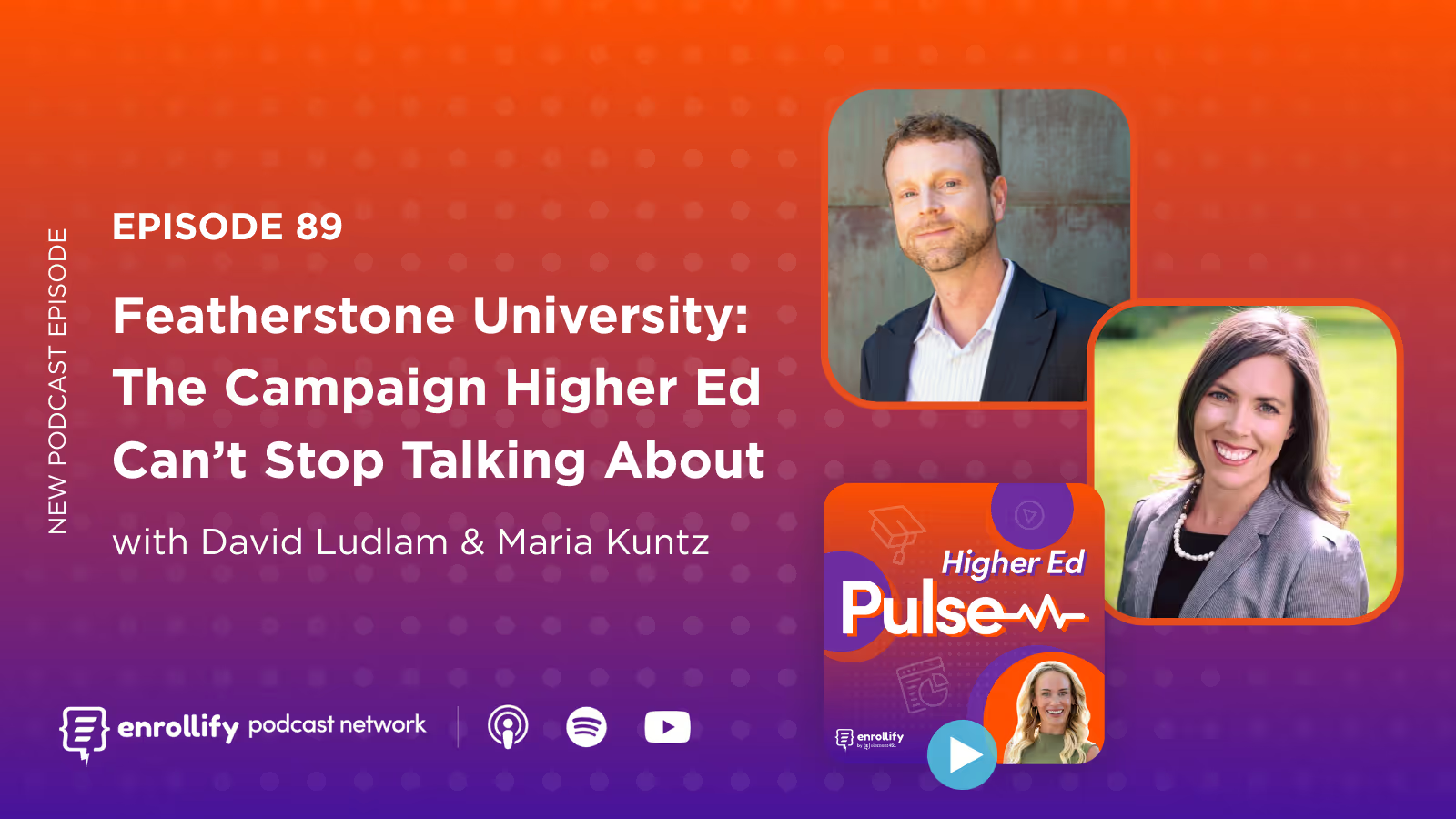
In this episode of Higher Ed Pulse, host Mallory Willsea sits down with David Ludlam, Vice President of Marketing Communications at Colorado Mesa University (CMU), and Maria Kuntz from the University of Colorado Boulder to unpack one of the boldest higher ed campaigns of the year — Featherstone University. Part satire, part strategy, this fictional “Ivy” school took aim at higher education’s elitism, and in doing so, CMU held a mirror up to the entire industry. We explore the campaign’s origin story, its creative risks, and how it’s redefining what higher education marketing can look like.
Key Takeaways
- Featherstone University is a fictional, satirical campaign that critiques elitism in higher education — launched by Colorado Mesa University to highlight its commitment to inclusivity and authenticity.
- The campaign is rooted in CMU’s institutional values — specifically their vision of being a "human scale university" that champions dignity, courage, humility, and resilience.
- The creative draws from pop culture and cinematic archetypes — inspired by narratives like Titanic, The Breakfast Club, and Bridgerton to emotionally resonate with prospective students and parents.
- The team embraced contrast marketing — rejecting the “B-roll and voiceover” formula and instead creating content that challenges industry norms through humor and truth.
- Initial metrics show massive engagement — with over 165,000 YouTube views in the first week and national press coverage, including The Chronicle of Higher Education.
- The campaign’s success is being measured differently — not just in enrollment KPIs but in how it sparks conversation, garners cultural relevance, and reflects CMU’s mission.
- This is a masterclass in higher education content marketing — a bold, values-driven campaign that proves risk can lead to relevance.
Episode Summary
What Sparked the Featherstone Campaign?
The Featherstone campaign didn’t begin with a storyboard — it began with a vision. Four years ago, Colorado Mesa University President John Marshall introduced the concept of the “human scale university,” built on seven first principles: love and dignity, courage, humility, resilience, curiosity, and power. This value-centric identity inspired a foundational shift on campus, culminating in a simple but powerful message: “We care about who you are, not who you know.”
This message, born from real conversations with students across rural and urban Colorado, became the heart of the Featherstone campaign. Instead of creating another feel-good commercial filled with smiling students and drone footage, CMU opted for satire — building a fictional Ivy League parody that amplified privilege, pomp, and prestige to contrast their own mission.
It was a creative risk, yes — but one deeply rooted in truth.
How Did CMU Turn Sincere Values into Sharp Satire?
Featherstone University might be fake, but the issues it represents are very real. CMU's team embraced “contrast marketing,” leaning into storytelling that stands out instead of blending in. David Ludlam shared how his team used classic narratives of underdog heroes — like Jack in Titanic or Daniel in The Karate Kid — to build a campaign that championed authenticity over appearance.
The team intentionally avoided consensus-building fluff. Instead, they chased creative tension. Internal disagreements helped refine the spot, particularly a pivotal critique that the original cut emphasized the joke more than the hero. That feedback led to a more emotionally balanced final version.
The campaign’s use of pop culture — from Bridgerton to Schizz University references — wasn’t just clever; it was strategic. These cultural touchpoints created instant recognition and helped viewers quickly understand what Featherstone represents — and what CMU stands against.
What Has the Reaction Been — and Is It Working?
Reactions have ranged from applause to critique — exactly as intended. While some industry insiders questioned whether the spot leaned too hard into satire or buried CMU’s value proposition, Ludlam made it clear: the 90-second spot was never meant to do all the work. It was designed to spark interest, not serve as a full brand explainer.
And spark interest it has.
With over 165,000 YouTube views in its first week and coverage in The Chronicle of Higher Education, Inside Higher Ed, and even mainstream press, the campaign is accomplishing its main goal: getting people to talk. Feedback from internal and external audiences has been overwhelmingly positive — and notably, CMU President John Marshall voiced the campaign himself, doubling down on its importance.
As for traditional metrics like enrollment? Ludlam says those are secondary. “We’re measuring something entirely different,” he explained — awareness, conversation, cultural resonance, and alignment with CMU’s mission.
Why Don’t More Universities Take Creative Risks?
That’s the question co-host Maria Kuntz posed at the end of the episode — and Ludlam didn’t sugarcoat the answer. Sometimes, he said, creative risk simply isn’t possible unless you have institutional alignment from the top down. At CMU, they do — and that’s what made Featherstone possible.
His advice to other CMOs and VPs of Enrollment? If your current institution doesn’t support bold ideas, maybe it’s time to find one that does. “You might have to leave,” he said candidly. Because great storytelling can’t happen in fear-based environments.
The episode wrapped with a clear takeaway: you can’t achieve national relevance with regional content. To truly stand out in a crowded field, you have to do something different — and believe in it enough to own the risk.
Connect With Our Host:
Mallory Willsea
https://www.linkedin.com/in/mallorywillsea/
https://twitter.com/mallorywillsea
About The Enrollify Podcast Network: The Higher Ed Pulse is a part of the Enrollify Podcast Network. If you like this podcast, chances are you’ll like other Enrollify shows too!
Some of our favorites include Generation AI and Confessions of a Higher Education Social Media Manager.
Enrollify is produced by Element451 — the next-generation AI student engagement platform helping institutions create meaningful and personalized interactions with students. Learn more at element451.com.






.svg)
.svg)
