






About the Episode
The AI Engage Summit is a free, virtual experience built to help higher ed leaders actually do something with AI. Over two afternoons, you’ll hear from peers, see practical demos, and walk away with ideas you can use immediately — no travel required, no cost to attend. If you’re ready to move AI from “interesting” to “impactful,” this is the place to be. Register now, don't miss out.
About The Episode:
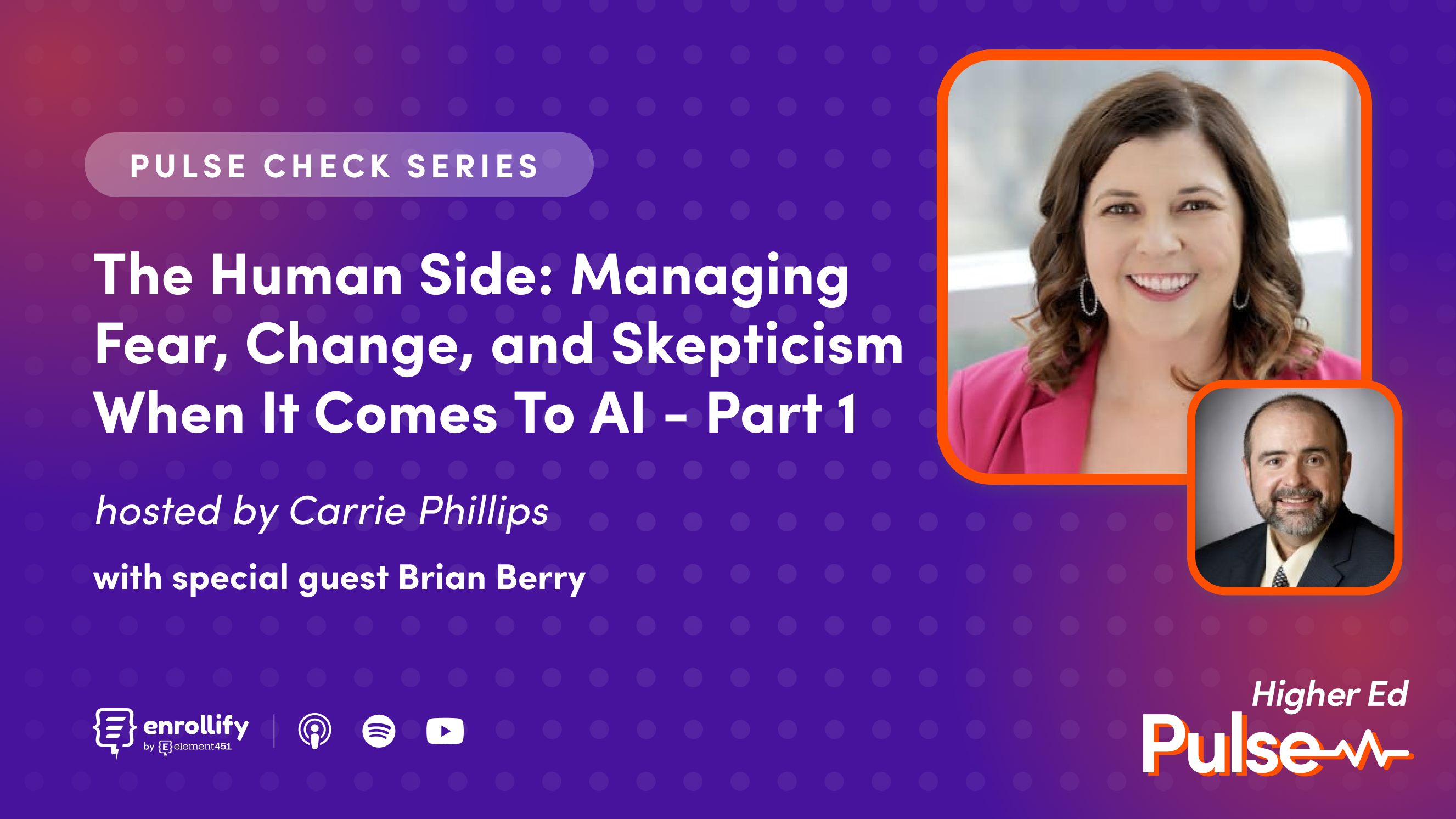
Carrie Phillips sits down with Brian Berry, Vice Provost of Research and Dean of the Graduate School at UA Little Rock. Brian also chairs the university’s AI Council, where he's helping build responsible frameworks for AI governance, policy, and adoption. This isn’t a theoretical conversation—it’s a transparent and practical look at how institutions can integrate AI without losing their soul. From the risks to the opportunities, this episode is a must-listen for anyone shaping the future of AI in higher education.
Key Takeaways
- AI in higher education requires governance, not guesswork. The AI Council at UA Little Rock was created to establish guiding principles and policies for safe, ethical, and effective AI use on campus.
- Don’t just react—build infrastructure. Institutions need both proactive governance structures and responsive learning communities to keep up with AI’s rapid pace.
- Faculty need freedom, not fear. The AI Council focuses on policy and infrastructure, not pedagogy, leaving room for faculty to explore how to integrate AI in their classrooms.
- Skeptics are your secret weapon. Including AI skeptics in committees ensures ethical conversations and prevents the institution from jumping into hype-driven mistakes.
- AI literacy is the bridge. Small-scale, consistent workshops and communities of practice are key to driving adoption without overwhelming staff and faculty.
- AI is the most powerful tool students have ever had. But it’s also a shortcut. Teaching students how to use AI responsibly must go hand-in-hand with helping them build discernment and critical thinking.
- Treat AI like a thought partner, not a thought leader. Use AI to ask better questions, pressure-test strategies, and expand your thinking—but never outsource your judgment.
Episode Summary
What is the role of an AI Council in higher education?
The AI Council at UA Little Rock was established to solve a foundational problem—how to adopt AI in a way that is both ethical and institutionally sound. Brian Berry explains that the council isn’t about prescribing how faculty or students should use AI. Instead, it's focused on setting the guardrails: policies, data governance structures, tool vetting processes, and risk mitigation strategies. This proactive approach echoes what happened during the early days of the internet—when higher ed had to evolve quickly and define ethical usage norms. The goal here is similar: don't stifle innovation, but don’t open the floodgates without a plan.
What’s the gap between AI theory and real campus life?
While academic literature often champions AI as a transformative educational tool, the reality is more complicated. Berry points out a central tension—AI is powerful, but it can also short-circuit learning. If students don’t develop foundational skills first, they won’t be able to tell the difference between high-quality work and what he calls “AI slop.” Faculty are in a bind: they want to prepare students for the future, but they also want to protect the integrity of learning. This is a gap UA Little Rock, like many institutions, is still actively working to close.
How do you move forward without overwhelming people?
According to Berry, staying current with AI takes serious time—he spends 8–10 hours a week just keeping up. But for most staff and faculty, that’s unrealistic. The solution? Scalable AI literacy. UA Little Rock is launching monthly Google-sponsored workshops focused on practical AI applications, along with AI Tech Talks and community-of-practice groups. These aren’t high-level keynotes—they’re hands-on opportunities to solve real campus problems with AI. It’s about small, accessible steps that build confidence and demystify the tech.
What does AI success look like on campus today?
One standout example comes from Berry’s own shop. His associate dean, a former technical writer, is using AI to build out social media content calendars for graduate recruitment. These AI-powered workflows ensure consistent, diverse content that algorithms favor, without requiring faculty to become full-time marketers. And this isn’t just helpful—it’s replicable. The team is now exploring how to scale this approach across other programs, proving that small wins with AI can have ripple effects throughout an institution.
What’s the key to bringing skeptics into the fold?
You can’t lead AI implementation if you’re ignoring the concerns of those who fear it. Berry makes a critical distinction between skeptics and cynics. Skeptics ask thoughtful questions; cynics shut things down. To avoid turning skeptics into cynics, his strategy is simple but effective: bring them in early, create space for dialogue, and be radically transparent about how AI is being used. By embedding ethics and transparency into every AI conversation, you create a culture of trust—and smarter decision-making.
What’s the most common AI misconception?
The misconception that AI tools are static is one Berry runs into constantly. People base their opinions on the capabilities of ChatGPT six months ago, not realizing that AI evolves faster than any technology before it. As he puts it, “the AI you’re using today is the dumbest AI you’ll ever use”. While verification is still essential, today’s models are leaps ahead of their predecessors. Leaders need to adjust their expectations—and make room for AI’s accelerating growth curve.
What’s one piece of advice for higher ed leaders just getting started with AI?
Berry leaves us with one of the most powerful reframes from the episode: “You are the thought leader. AI is the thought partner.” Don’t outsource your ideas to AI—use it to challenge, test, and refine them. Whether you're developing a strategic plan, evaluating recruitment strategies, or updating curriculum, AI can serve as a pressure tester. Ask it to interrogate your thinking, simulate stakeholder responses, or spot gaps in your plan. But never let it do your thinking for you.
Enrollify is produced by Element451 — the next-generation AI student engagement platform helping institutions create meaningful and personalized interactions with students. Learn more at element451.com.





.svg)
.svg)
