






About the Episode
About the Episode:
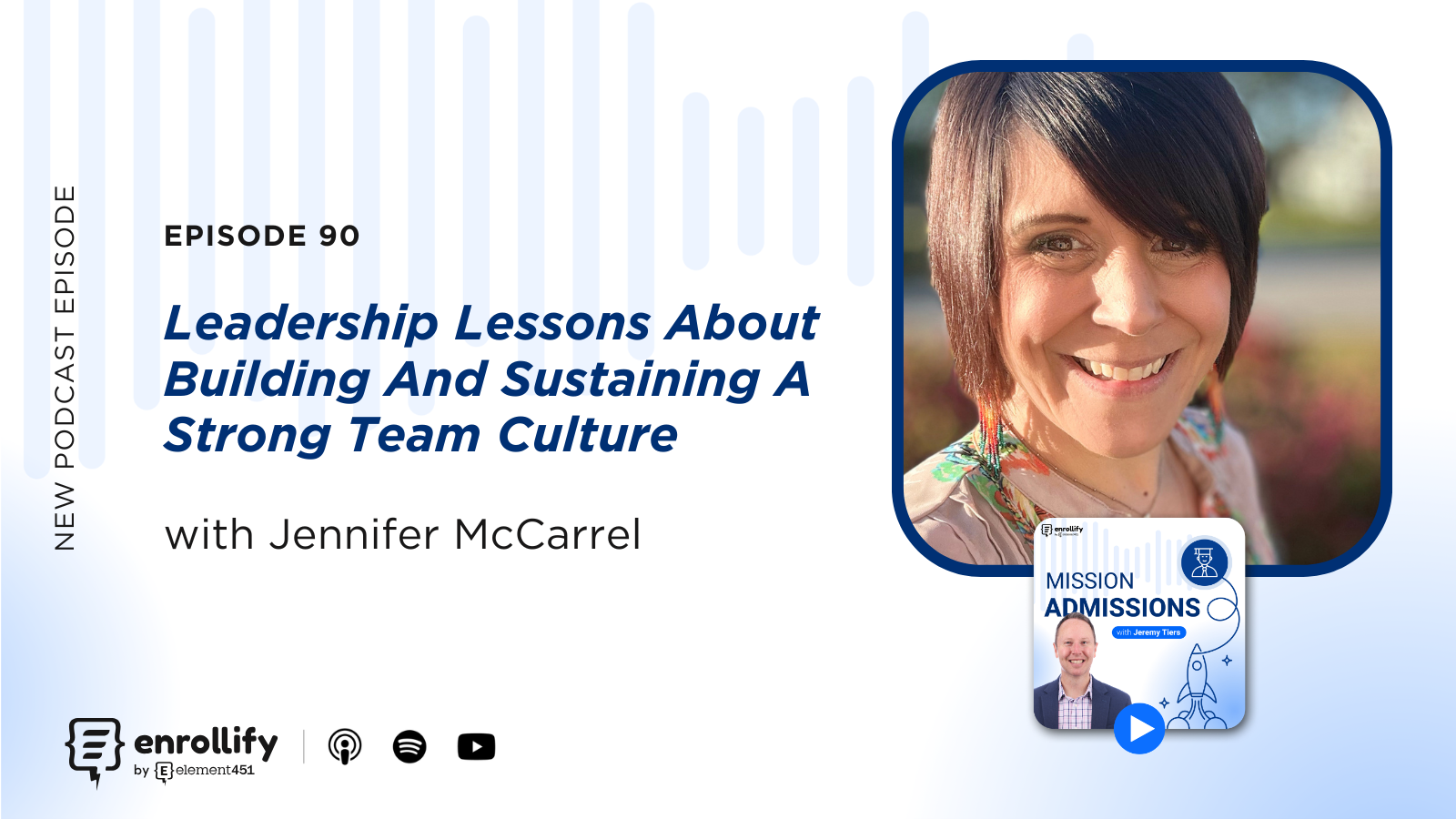
Jeremy Tiers sits down with Jennifer McCarrel, Vice Chancellor for Communications and Marketing at the University of North Carolina at Pembroke, for a candid conversation about what it really takes to build and sustain a strong team culture in higher education. Drawing on nearly two decades of leadership experience, Jenn shares practical insights on creating trust, fostering collaboration, and helping teams stay connected to the “why” behind their work. Together, Jeremy and Jenn explore how culture impacts everything from employee engagement to the student experience, and why leaders must be intentional about communication, recognition, and adaptability.
Jenn reflects on the importance of understanding individual work styles, setting clear non-negotiables, and balancing accountability with empathy as a leader. The conversation dives into the realities of leading diverse teams made up of introverts, extroverts, creatives, and strategists, while also addressing the challenges of navigating toxic behavior, rebuilding trust, and preventing strong cultures from becoming stagnant. Jenn also shares practical tactics she uses with her own team, including peer recognition exercises, collaborative retreats, and small moments of celebration that reinforce connection and appreciation.
Throughout the episode, Jeremy and Jenn unpack why curiosity, active listening, and thoughtful leadership matter more than ever in today’s fast-paced higher ed environment. They also discuss the importance of helping employees understand how their work contributes to institutional success and student outcomes, especially during stressful seasons and periods of change.
Key Takeaways
- Strong team culture directly impacts the quality of the student and employee experience.
- Leaders must consistently communicate the “why” behind the work to build buy-in and purpose.
- Effective team culture requires adaptability to different communication and work styles.
- Small moments of recognition and appreciation can have a major impact on morale and trust.
- Leaders should address toxic behavior early before it impacts the broader team culture.
- Curiosity, collaboration, and asking thoughtful questions help leaders build stronger relationships and trust.
- Team culture can begin to decline when collaboration decreases and meetings become transactional instead of creative.
- Great leaders balance transparency with emotional steadiness, knowing when to share challenges and when to shield their teams from unnecessary stress.
Connect With Our Host:
Jeremy Tiers






.svg)
.svg)
