






About the Episode
About the Episode:
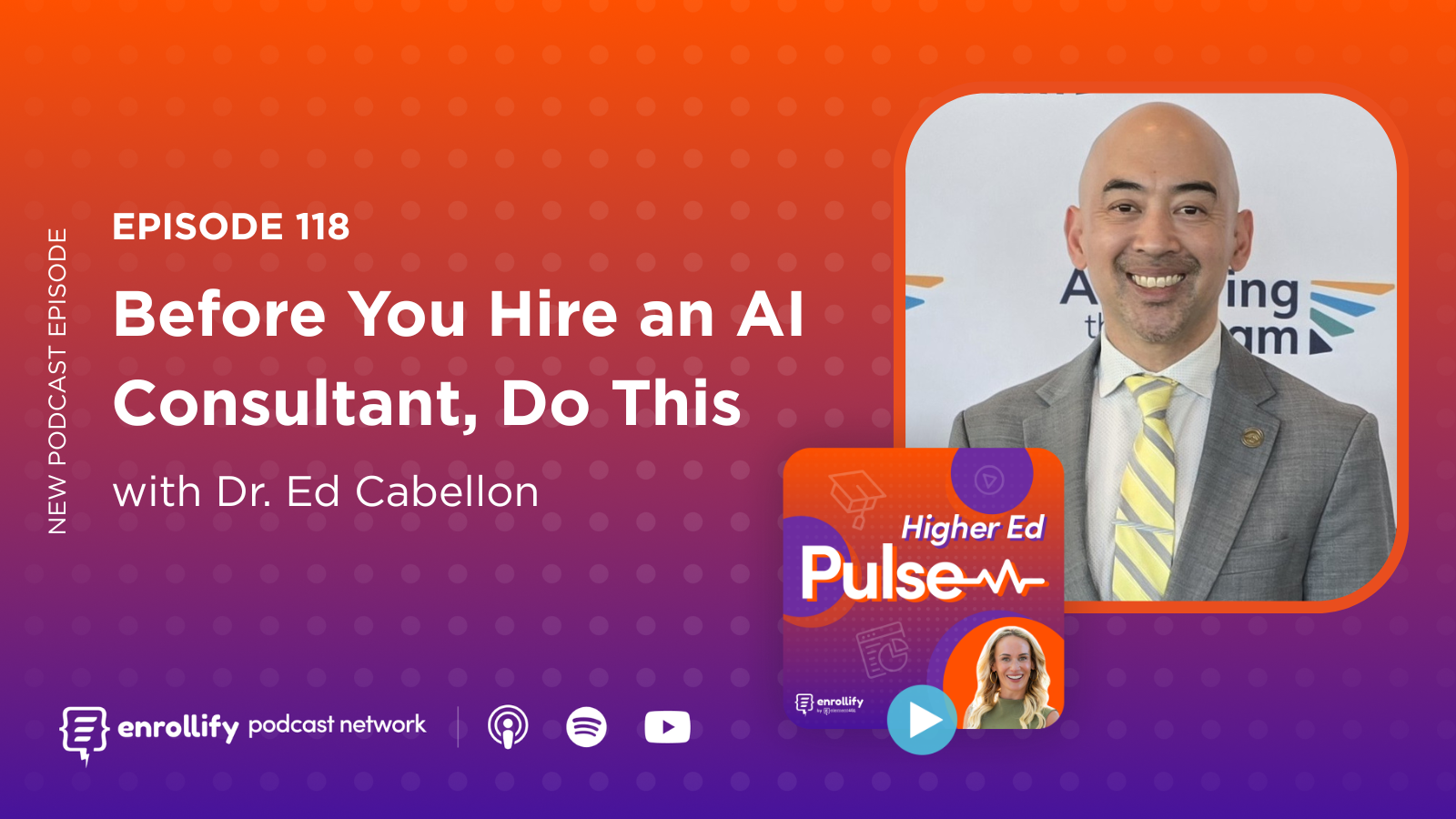
On this episode of Higher Ed Pulse, host Mallory Willsea sits down with Ed Cabellon, Interim Vice President for Student Experience at Frederick Community College, for a behind-the-scenes conversation about what it actually takes to build an enterprise AI strategy in higher education. Rather than rushing into flashy AI pilots or chasing trends, Ed shares how FCC spent months laying the groundwork for a sustainable, institution-wide AI roadmap rooted in governance, collaboration, and operational readiness. Together, Mallory and Ed unpack the realities of leading AI transformation on campus, including how to align cabinet leadership, faculty innovation, IT infrastructure, and institutional priorities before bringing in outside consultants.
The conversation explores how FCC formed its AI Leadership Steering Group, why cross-functional representation matters, and how the institution intentionally built on faculty-led generative AI work already happening across campus. Ed explains how collaboration between student affairs, IT, enrollment, HR, and academic leadership helped shift AI conversations from isolated experimentation to an enterprise-wide strategic initiative. He also shares why clean data, strong governance, and clearly defined institutional goals are foundational for any successful AI implementation in higher education.
Mallory and Ed also discuss the decision to hire an AI consultant and why FCC approached the process with a highly intentional, advisory-first mindset. Rather than seeking a vendor to prescribe solutions or push preferred tools, the college developed a tool-agnostic RFQ focused on strategic thought partnership, change management, and roadmap development. Ed explains how institutions can avoid common mistakes like implementing AI without operational readiness, neglecting procurement integrity, or allowing AI strategy to remain siloed within a single department.
Throughout the episode, Ed offers a practical playbook for higher education leaders navigating AI governance, institutional alignment, and organizational change. He walks through FCC’s phased AI roadmap, including discovery, risk and readiness assessment, signature project selection, roadmap development, and change leadership. The conversation also highlights the importance of funding innovation, creating safe AI pilot environments for faculty and staff, and building institutional buy-in through transparency, collaboration, and intentional communication.
A major theme of the episode is the importance of balancing innovation with strategy. Ed emphasizes that institutions should resist the pressure to adopt AI simply because peer institutions are doing so. Instead, he encourages leaders to focus on how AI can solve real institutional challenges, improve operational efficiency, and better support students, faculty, and staff. Mallory and Ed also discuss how leadership transitions, cabinet-level champions, and institutional culture can influence the success or failure of AI initiatives on campus.
Key Takeaways:
- Successful AI implementation in higher education starts with governance, collaboration, and organizational readiness — not technology selection.
- Cross-functional AI steering committees help institutions avoid siloed strategies and create broader campus alignment.
- Clean, well-structured institutional data is essential before launching large-scale AI initiatives.
- Tool-agnostic and advisory-focused consulting approaches can help colleges build sustainable, flexible AI roadmaps.
- Institutions should prioritize intentional AI adoption strategies that align with their unique goals, culture, and operational needs.
- Funding AI pilots and innovation projects signals institutional commitment and encourages campus-wide engagement with emerging technologies.
Connect With Our Host:
Mallory Willsea
https://www.linkedin.com/in/mallorywillsea/
https://twitter.com/mallorywillsea
Enrollify is produced by Element451 — the next-generation AI student engagement platform helping institutions create meaningful and personalized interactions with students. Learn more at element451.com.



.svg)
.svg)
