






About the Episode
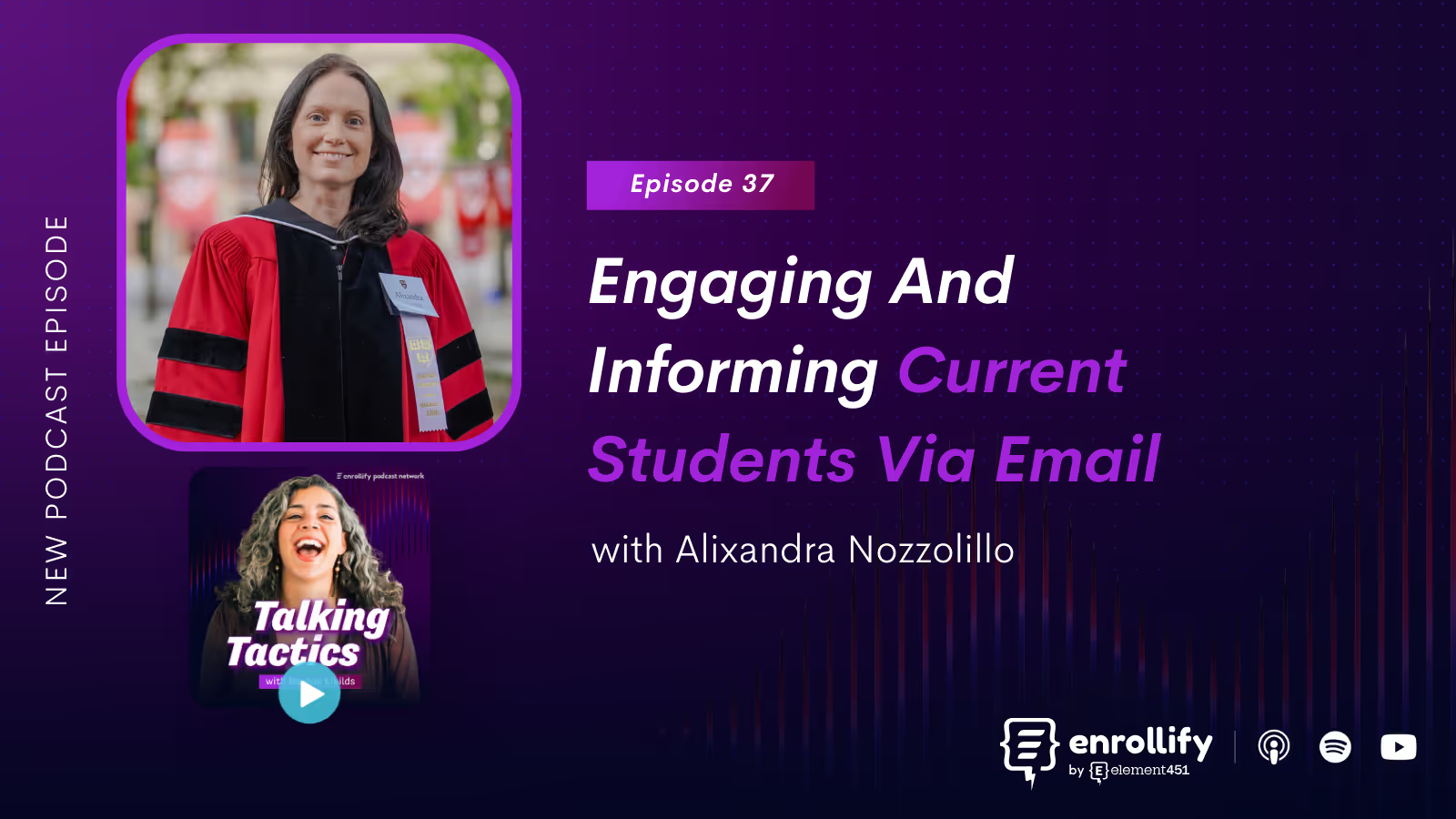
About the Episode: Imagine a college where 80-90% of the current student body opens your weekly email every single week. And not only that, but they attend the events you send them and take the actions you ask them to take. Well, this is not a dream for Alixandra Nozzolillo and her team at Harvard College. Alix transformed the college’s communication from way too many emails to one weekly email with all the important news. This effort has garnered them open rates between 80% and 90% consistently for over four years, incredible trust from the students, and a great culture of collaboration on campus.
Key Takeaways
- Simplifying email communication can drastically improve engagement, leading to 80-90% open rates.
- Understanding your audience’s preferences through research and listening tours is key to effective email strategy.
- Curating a single weekly email with clear, concise content reduces noise and increases the signal, ensuring critical information is noticed.
- Testing and piloting new strategies allows for tweaks and improvements before fully rolling out.
- Strong team collaboration and leadership buy-in are essential for long-term success.
How Harvard College Simplified Email Communication and Increased Engagement
Why Simplifying Emails is Essential for Student Engagement
In the modern era of communication, students are often bombarded with emails, leading to a lack of engagement and attention. Harvard College faced this challenge before the pandemic, recognizing that students were overwhelmed by the sheer volume of messages they received. Alix Nazolillo shared that, prior to 2019, students at Harvard were experiencing "TLDR" fatigue, with too much information to process in their inboxes.
To address this, Alix and her team sought to reduce the noise and create a single point of truth through a streamlined, weekly newsletter. Instead of multiple emails each week, students now receive one well-curated email that captures the most important announcements and events, while maintaining a focus on clarity and brevity.
This approach not only simplified administrative tasks but also ensured students were more likely to engage with the content. By focusing on what was truly important, and giving students one place to look for reliable updates, the team saw a marked improvement in open rates and student interaction.
How Harvard's Email Strategy Came to Life
The initial inspiration for Harvard's new email strategy came from an unlikely place: scientific research on alarm fatigue in emergency rooms. Alix was reading an article about how medical professionals handle the constant influx of signals in a high-stress environment and realized the parallels to communication fatigue. Just like in the ER, where important alarms needed to stand out, Alix believed Harvard needed a way to help critical emails rise above the noise.
By reducing the number of emails sent and consolidating information into one weekly digest, the team created a "signal" that students learned to trust and pay attention to. This approach was tested with smaller student groups first, allowing the communications team to gather data and feedback before fully implementing the new strategy college-wide.
Alix also highlighted the importance of listening to the audience. She conducted a listening tour with faculty, staff, and students to gather insights into what was and wasn’t working in email communications. These conversations helped inform the structure and content of the weekly newsletter, ensuring it met the needs of various stakeholders.
What Were the Results?
The results of simplifying the email strategy at Harvard College were remarkable. The weekly newsletter saw consistent open rates between 80-90%, particularly at the start of the academic year. This success was attributed not only to the simplified content but also to the trust the students had in the source. Students knew that if something was included in the weekly newsletter, it was important enough to warrant their attention.
Moreover, the new approach also reduced the number of individual emails sent to students by at least 30%, streamlining communication and reducing inbox clutter. Leadership emails, used strategically for major announcements, also saw higher engagement, as students recognized these as signals of particularly important information.
About The Enrollify Podcast Network
Talking Tactics is a part of the Enrollify Podcast Network. If you like this podcast, chances are you’ll like other Enrollify shows too!
Some of our favorites include Mission Admissions and Higher Ed Pulse.
Enrollify is produced by Element451 — the next-generation AI student engagement platform helping institutions create meaningful and personalized interactions with students. Learn more at element451.com.
Element451 is hosting the AI Engage Summit on Oct 29 and 30. Register now for this free, virtual event.The future of higher ed is being redefined by the transformative power of AI. The AI Engage Summit brings together higher ed leaders, innovators, and many of your favorite Enrollify creators to explore AI’s impact on student engagement, enrollment marketing, and institutional success.
Experience firsthand how AI is improving content personalization at scale, impacting strategic decision-making, and intuitively automating the mundane tasks that consume our time. The schedule is packed with real examples and case studies, so you leave knowing how to harness AI to drive meaningful change at your institution.
Whether you’re looking to enhance student outcomes, optimize enrollment marketing, or simply stay ahead of the curve, the AI Engage Summit is your gateway to the next level of higher education innovation. Registration is free, save your spot today.






.svg)
.svg)
