






About the Episode
Got a story to tell? An innovative idea to share? Fill out our guest nomination form and let's chat!
About the Episode:
High school students are inundated by our emails — just go to r/ApplyingToCollege and search for “emails” and you’ll see just how bad it is.
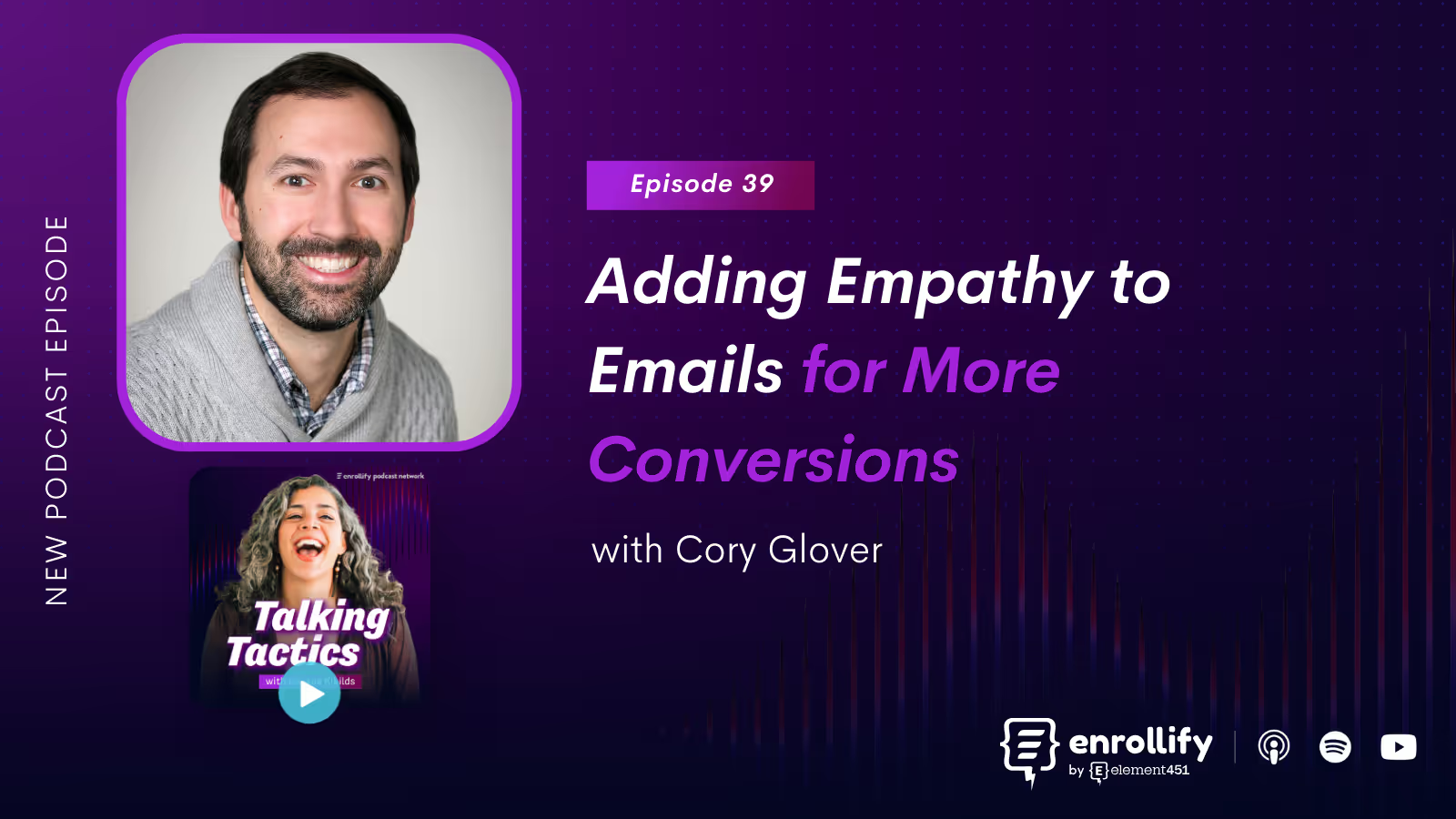
Cory Glover at the University of Michigan - Dearborn and his small email team have figured out how to break through the noise. It’s simple: Adding empathy. First, by meeting the students where they are and not just talking about the institution. And second, by respecting their time and inbox, making copy easier to scan, actions clear to understand, and the tone more conversational.
The results? Combined with the rest of their marketing mix, they saw a 30% increase in deposits and a 17% increase in applications after the email changes were made.
Key Takeaways
- Hyper-specific CTAs increase engagement, with clear instructions leading to higher click-through rates.
- Conversational tone using second-person language and contractions helps emails feel more approachable and relatable.
- Simplified and scannable designs with prominent buttons, icons, and numbered lists make emails easier to navigate.
- Empathy and welcome-focused language foster trust, encouraging students to feel connected and supported.
- Testing and adapting CTA language based on data can yield measurable improvements in engagement.
Episode Summary
Why Rethinking Email Language Matters
In the world of higher education marketing, clarity and engagement are paramount. Corey Glover saw an opportunity to improve engagement in University of Michigan-Dearborn's email campaigns by looking closely at student responses to existing language. With a noticeable drop in engagement rates after the first few emails, Glover aimed to counter this by revising the language to keep students engaged throughout the entire funnel. By examining each email’s performance, the team could identify patterns and make data-backed adjustments to maintain interest, especially among prospective students early in the admissions journey.
The Impact of Specific CTAs in Admin Emails
One major shift Glover implemented was moving from vague CTAs, like "Reserve Your Spot," to clear, action-oriented language, such as "Pay Your Deposit." This change addressed an often-overlooked aspect: students need to know precisely what action they are expected to take. Vague language risks confusion, especially when terms like "reserve" could refer to events, orientations, or classes. The results were impressive—a 17.3% click-through rate for the new CTA, compared to just 10% for the original. This success was further validated by a 30% increase in deposits, showing the power of clear, direct communication.
Transforming Inquiry Emails with Empathy-Driven Copy
On the inquiry side, Glover’s team recognized the need for more personalized, welcoming language to create connections with students early in their decision-making journey. They embraced second-person language and conversational contractions, like “you’ll” instead of “you will,” to make the emails feel more like one-on-one conversations. Additionally, using empathy to meet students where they are—acknowledging that the application process can be overwhelming—helps position the university as supportive, not sales-oriented. This strategy aligns with higher education’s emphasis on fostering connections, showing students they are seen and valued rather than merely recruited.
Designing Emails for Scannability and Engagement
Glover also enhanced the visual structure of emails to improve readability and encourage action. Adding icons, numbered lists, and bold, prominent CTA buttons in university colors made the emails visually engaging and easy to scan. For students navigating dozens of emails daily, this approach minimizes effort while maximizing message clarity. With each element reinforcing a friendly, supportive tone, the email feels more trustworthy—leading to a noticeable 50% open rate, up from the previous 40%, and a sustained 3% click rate throughout campaigns.
Addressing Internal Challenges and Overcoming Resistance
Implementing these changes wasn’t without challenges. Like many in higher education marketing, Glover faced initial resistance, particularly around using direct language in CTAs, such as “pay your deposit,” which some worried might feel too transactional. But with clear evidence of improved results, Glover's team gained support from stakeholders. For others looking to achieve similar transformations, Glover emphasizes the importance of showing results, engaging stakeholders early, and being willing to “test and learn” to build incremental buy-in.
Future Goals: Connecting Early with High School Sophomores and Juniors
Looking ahead, Glover plans to refine inquiry emails for younger students, creating content that feels relevant and engaging to high school sophomores and juniors. He envisions content that helps students explore interests and career paths rather than focusing solely on what Michigan-Dearborn offers. By supporting students in these formative years, Glover hopes to foster long-term connections and help them make decisions aligned with their goals, well before application deadlines arise.
Attend the 2025 Engage Summit!
The Engage Summit is the premier conference for forward-thinking leaders and practitioners dedicated to exploring the transformative power of AI in education.
Explore the strategies and tools to step into the next generation of student engagement, supercharged by AI. You'll leave ready to deliver the most personalized digital engagement experience every step of the way.
👉🏻 Register now to secure your spot in Charlotte, NC, on June 24-25, 2025! Early bird registration ends February 1st.





.svg)
.svg)
