






About the Episode
Got a story to tell? An innovative idea to share? Fill out our guest nomination form and let's chat!
About the Episode:
Shopify’s CEO Just Issued a Bold AI Ultimatum to His Entire Team
ASU+GSV 2025: Uses for Agentic AI in Higher Education
Learning Genie Unveils First AI Curriculum Agent at ASU-GSV
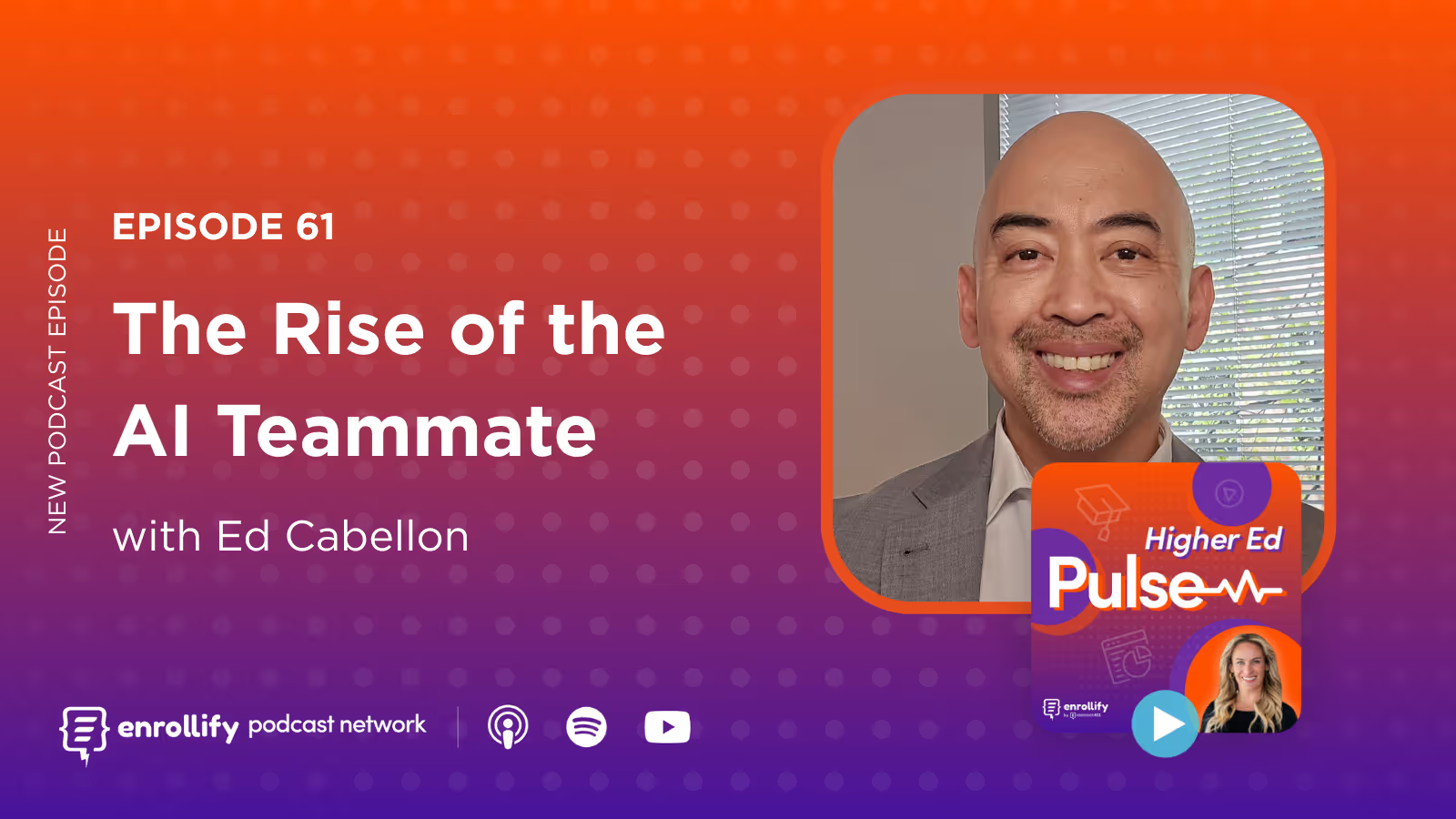
In this episode of Higher Ed Pulse, host Mallory Willsea sits down with Dr. Ed Cabellon, a veteran in student affairs and digital transformation, to explore a new kind of teammate in higher ed—agentic AI. From admissions chatbots to AI-powered parking services, institutions are embedding these tireless agents across campus functions. But is higher ed ready for this seismic shift? Tune in as they unpack what it means to manage and collaborate with AI colleagues—and how this tech can truly support, not just replace, the human experience.
Key Takeaways
- Agentic AI is here—and it's doing more than taking meeting notes. Institutions are already deploying AI agents for admissions, financial aid, parking management, and more.
- AI won’t lighten the load immediately. Dr. Cabellon argues that onboarding AI requires major upfront work in data cleanup, process audits, and training.
- Transparency and student involvement are non-negotiables. Students are more likely to trust and adopt AI services when they're part of the planning process and understand how the tools work.
- Agentic AI will reshape team structures. Managing AI agents demands cross-functional oversight, clear KPIs, and thoughtful policies around ethics and privacy.
- Community colleges are poised to lead. Their agility and focus on workforce readiness make them prime candidates for early adoption of agentic AI.
- Personalized AI responses will be the next frontier. Instead of static knowledge bases, AI agents will begin tailoring answers based on student context and behavior.
What is agentic AI and how is it already operating in higher ed?
Mallory sets the stage by explaining that higher ed is entering a new AI era—one where AI agents not only assist but act independently. At institutions like Unity Environmental University, AI tools are already leading admissions conversations. At Georgia State, AI-powered nudges are reducing summer melt by 20%. These aren't futuristic concepts—they're here now, handling tasks that used to sit squarely on a staff member’s desk.
Will AI coworkers reduce burnout or just shift the burden?
Dr. Ed Cabellon, drawing on his leadership experience and research, notes that the initial phases of AI implementation often increase workload. Institutions must retrain staff, clean up outdated data, and rethink business processes. He likens it to replacing the square wheels on a cart—extra work at the start, but essential for long-term efficiency and scalability. Ed encourages leaders to ask hard questions about their internal operations before layering in AI.
What challenges does agentic AI present for staff and leadership?
Integrating AI agents will reshape team dynamics and operational norms, Ed says. AI agents need clear scopes, measurable KPIs, and ethical guardrails. But beyond the tech, there's a cultural element—many higher ed institutions will need to confront unwritten rules and opaque decision-making processes. Ed emphasizes that successful AI implementation will require collaborative oversight, not just a plug-and-play toolset.
How are students reacting to AI on campus?
According to Dr. Cabellon, students—especially those at community colleges—are generally open to AI if it helps them access information faster and more accurately. However, transparency is critical. Students want to know when they’re interacting with a bot and how their data is being used. Institutions that are upfront and involve students early in planning will find greater trust and adoption.
What does it look like to manage an AI team member?
Managing an AI agent isn’t all that different from onboarding a human staffer, Dr. Cabellon explains. It requires orientation, defined goals, and continuous feedback. AI agents should be monitored for accuracy, effectiveness, and student satisfaction, and their impact reviewed by cross-functional teams. With the right structure and accountability in place, AI can become a reliable, productive coworker.
Connect With Our Host:
Mallory Willsea
https://www.linkedin.com/in/mallorywillsea/
https://twitter.com/mallorywillsea
About The Enrollify Podcast Network: The Higher Ed Pulse is a part of the Enrollify Podcast Network. If you like this podcast, chances are you’ll like other Enrollify shows too!
Some of our favorites include Generation AI and Confessions of a Higher Education Social Media Manager.
Enrollify is produced by Element451 — the next-generation AI student engagement platform helping institutions create meaningful and personalized interactions with students. Learn more at element451.com.
Attend the 2025 Engage Summit!
The Engage Summit is the premier conference for forward-thinking leaders and practitioners dedicated to exploring the transformative power of AI in education.
Explore the strategies and tools to step into the next generation of student engagement, supercharged by AI. You'll leave ready to deliver the most personalized digital engagement experience every step of the way.
👉🏻 Register now to secure your spot in Charlotte, NC, on June 24-25, 2025!




.svg)
.svg)
